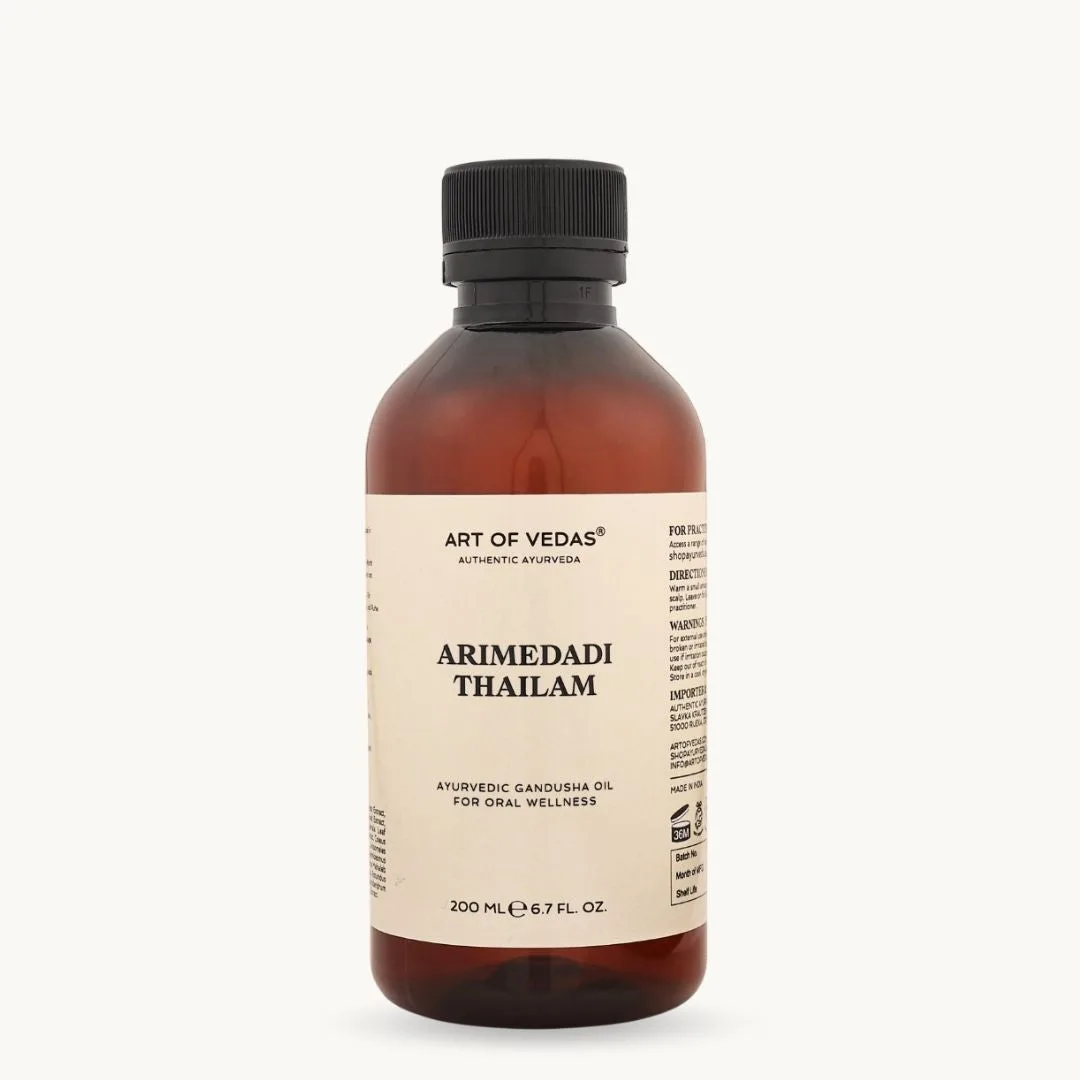
Wat Arimedadi Thailam tot de klassieke olie van de ayurvedische mondverzorging maakt, zijn de ingrediënten. Genoemd naar Arimeda, een schors in het hart van de formule, brengt het een lange reeks kruiden samen in een sesambasis voor het dagelijkse oliezuigen en de verzorging van het tandvlees. Dit artikel loopt de ingrediënten van Arimedadi Thailam stuk voor stuk na, stelt het kruid voor waaraan het zijn naam dankt, en noemt de klassieke teksten en de aandachtspunten voor verstandig gebruik die erbij horen.
Arimeda: het kruid achter de naam
Arimeda is een schors uit de acaciafamilie, nauw verwant aan Khadira, en zij geeft de olie zowel haar naam als haar karakter. In de mondverzorgingstraditie worden samentrekkende schorsen van deze soort gewaardeerd om het stevige, schone gevoel dat zij in de mond achterlaten; daarom staat Arimeda vooraan in de formule. De olie dient voor Gandusha en Kavala, de klassieke praktijken van het vasthouden en spoelen van olie, en wordt in Ayurveda van oudsher gebruikt ter ondersteuning van de dagelijkse mondverzorging en het comfort van het tandvlees.
De band met Khadira
Arimeda en Khadira zijn botanische neven, beide leden van de acaciagroep die in Ayurveda gewaardeerd wordt om haar samentrekkende, klarende hoedanigheid. Khadira staat vooral bekend om de huidverzorging, en wie haar begrijpt, begrijpt ook waarom Arimedadi in de mond aanvoelt zoals het aanvoelt. Onze gids over hoe Khadira de huid ondersteunt behandelt deze familie van schorsen uitvoeriger. De afgewerkte mondverzorgingsolie voeren wij in ons assortiment als Arimedadi Thailam.
De bredere ingrediëntenlijst
Rondom Arimeda verzamelt het klassieke recept een grote groep ondersteunende kruiden in een basis van sesamolie. Van oudsher horen daar Khadira (Acacia catechu, de samentrekkende schors voor huid en mond), Haritaki (Terminalia chebula, een klassieke reinigende vrucht), Jatipatri en Lavanga (foelie en kruidnagel, verwarmende aromaten) en andere wortels bij, samen met de plantaardige samentrekkende middelen die kenmerkend zijn voor mondformules. Elk is gekozen om de schone, stevige hoedanigheid die het aan een mondspoeling meegeeft. Haritaki komt ook veelvuldig als poeder voor, beschreven in onze gids over Churnam, en is afzonderlijk verkrijgbaar als Haritaki-poeder.
Klassieke teksten en overlevering
Arimedadi Thailam hoort thuis in de klassieke ayurvedische literatuur over Mukha en Danta, de zorg voor mond en tanden. Het geldt van oudsher als een van de mondverzorgingsoliën en is overgeleverd via de standaardcompendia en de bereidingstraditie. Het is minder één modern recept dan een klassiek sjabloon dat verschillende bereiders met kleine afwijkingen uitvoeren, terwijl Arimeda en de samentrekkende kern onaangetast blijven. Voor het gebruik van de olie en haar plaats in de routine verwijzen wij naar onze gids over Arimedadi Thailam.
Wat de ingrediënten bijdragen
- Arimeda-schors: het samentrekkende leidende kruid, dat de olie haar stevige, schone karakter geeft.
- Khadira (Acacia catechu): een verwante samentrekkende schors uit dezelfde familie.
- Haritaki (Terminalia chebula): een klassieke reinigende vrucht, van oudsher in de mondverzorging gebruikt.
- Kruidnagel en foelie: verwarmende aromaten die de mond verfrissen.
- Basis van sesamolie: de traditionele drager die de kruiden tijdens het spoelen bijeenhoudt.
Aandachtspunten voor verstandig gebruik
Arimedadi Thailam is bestemd voor uitwendig gebruik in de mond bij het oliezuigen en wordt niet doorgeslikt. Neem een kleine hoeveelheid, spoel enkele minuten zachtjes, spuug de olie daarna uit en spoel na. Werp de gebruikte olie weg in de afvalbak en niet in de gootsteen, omdat olie afvoeren kan verstoppen. Voelt de mond gevoelig aan, verkort dan de duur of gebruik iets minder olie. Zoals bij elke mondverzorgingsroutine vult het poetsen en de tandheelkundige zorg aan, maar vervangt het die niet.
Veelgestelde vragen
Wat zijn de belangrijkste ingrediënten van Arimedadi Thailam?
De formule draait om Arimeda, een samentrekkende acaciaschors, aangevuld met Khadira, Haritaki, kruidnagel, foelie en andere aromatische en samentrekkende kruiden in een basis van sesamolie. Arimeda geeft de olie haar naam en haar stevige, schone karakter, terwijl de ondersteunende kruiden frisheid en diepte toevoegen. De precieze lijst kan per bereider licht verschillen, maar de samentrekkende kern blijft gelijk.
Wat is Arimeda in Arimedadi Thailam?
Arimeda is een schors uit de acaciafamilie, nauw verwant aan Khadira. In Ayurveda worden samentrekkende schorsen van deze soort in de mondverzorging gewaardeerd om het schone, stevige gevoel dat zij achterlaten. Arimeda voert de formule aan en geeft de olie haar naam. Daarom wordt Arimedadi Thailam zo sterk met de mondverzorgingstraditie verbonden en niet met de algemene massage.
Hoe verhoudt Arimeda zich tot Khadira?
Zij zijn botanische neven, beide leden van de acaciagroep die in Ayurveda gewaardeerd wordt om haar samentrekkende, klarende hoedanigheid. Khadira staat vooral bekend om de huidverzorging, Arimeda daarentegen om de mond. Wie de familie kent, begrijpt het karakter van Arimedadi Thailam beter. Onze gids over Khadira behandelt de bredere groep schorsen en hun traditionele gebruik.
Wordt Arimedadi Thailam doorgeslikt?
Nee. Het dient voor het oliezuigen, het vasthouden of spoelen van de olie in de mond, waarna zij wordt uitgespuugd en de mond wordt nagespoeld. De olie wordt niet doorgeslikt. Neem een kleine hoeveelheid, houd de sessie zacht en kort, en werp de gebruikte olie weg in de afvalbak in plaats van in de gootsteen. Het begeleidt het poetsen en de reguliere tandheelkundige zorg zonder die te vervangen.
Tot welke klassieke traditie behoort het?
Arimedadi Thailam behoort tot de klassieke ayurvedische traditie van de Mukha- en Danta-verzorging, de zorg voor mond en tanden. Het verschijnt in de standaardcompendia en in de olietraditie als een van oudsher gevestigde mondverzorgingsolie. Verschillende bereiders maken het met kleine afwijkingen, terwijl Arimeda en de samentrekkende kern in het midden blijven staan.
Uitsluitend voor uitwendig gebruik. Geen vervanging voor professioneel medisch advies.