If you have just opened your first jar of Kuzhambu and are wondering why it does not pour, nothing is wrong. A Kuzhambu is meant to be semi-solid. It is the classical tradition's dense, slow-absorbing counterpart to the classical massage oil, made for focused local work rather than quick full-body coverage. This beginner's guide assumes no prior knowledge and answers the practical questions first: how to warm it, how much to use, what to do about towels and showers, and the three mistakes almost every newcomer makes once.
What you are holding
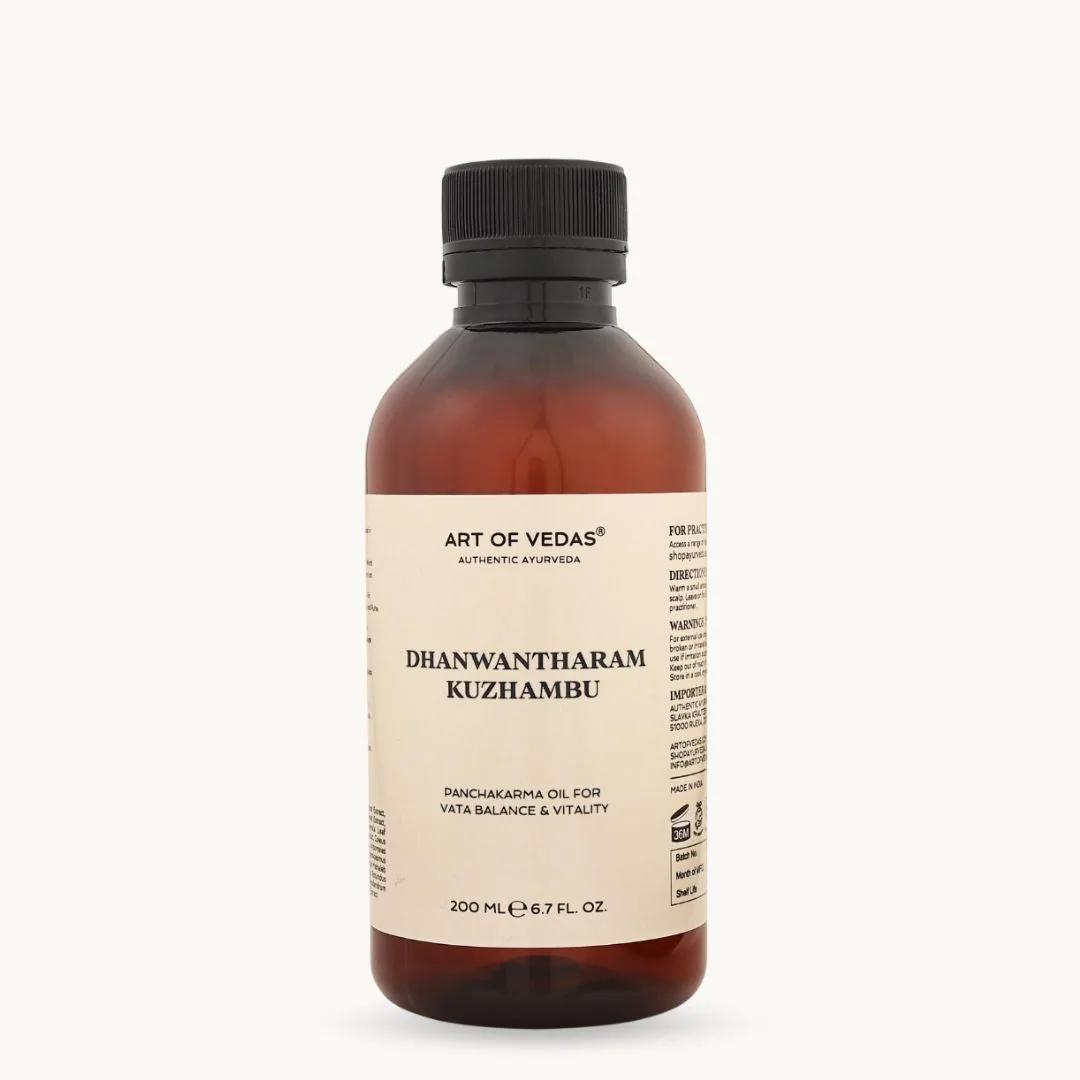
A Kuzhambu is prepared on a base of three fats, traditionally sesame, coconut and castor, cooked slowly with herbal decoctions and fresh plant pastes until the water content has evaporated and the preparation cools to a soft, dense set. It is not an oil and is not used like one. Warmed gently, it softens enough to spread; on the skin it stays on the applied area and absorbs slowly over twenty minutes or more. That behaviour is the entire point: it turns massage into unhurried, local care for shoulders, legs, lower back or feet. A good first jar is Dhanwantharam Kuzhambu, the semi-solid form of classical's most widely used household formula, built on Bala and the ten classical roots of Dashamoola cooked into the three-fat base.
Why beginners come to like the format
- It stays where you put it: no drips on the floor, the sofa or the bathroom tiles
- One jar lasts: a teaspoon per region is a full serving
- It suits small sessions: one shoulder or two feet is a complete ritual
- The slow absorption builds in rest time you would not otherwise take
- It is forgiving: warming, applying and wiping are hard to get badly wrong
Your first session, in plain steps
Set aside forty minutes in the evening. Place the closed jar in a bowl of hot tap water for five to ten minutes. Meanwhile take a warm shower and dry off; warm skin receives the preparation far better than cold. Lay an old towel where you will sit.
Take a teaspoon of the softened preparation, soften it further between your palms and choose one region: calves are ideal for a first attempt. Apply with slow, firm strokes along the muscle for five minutes, then stop and rest for twenty. Wipe off the residue with a warm, damp towel. A short rinse afterwards is optional; a full second shower with soap will simply remove what you have applied, so keep it brief and mild. That is the whole method, and the detailed version with timings lives in our guide on how to warm and apply a Kuzhambu.
The three most common mistakes
First: using too much. A thick coating does not absorb better; it simply ends up in the towel. A teaspoon per region, worked in slowly, is the traditional measure.
Second: skipping the warmth. Cold preparation on cold skin spreads badly and feels unpleasant. Warm the jar in water, warm the skin with a shower, keep the room free of draughts.
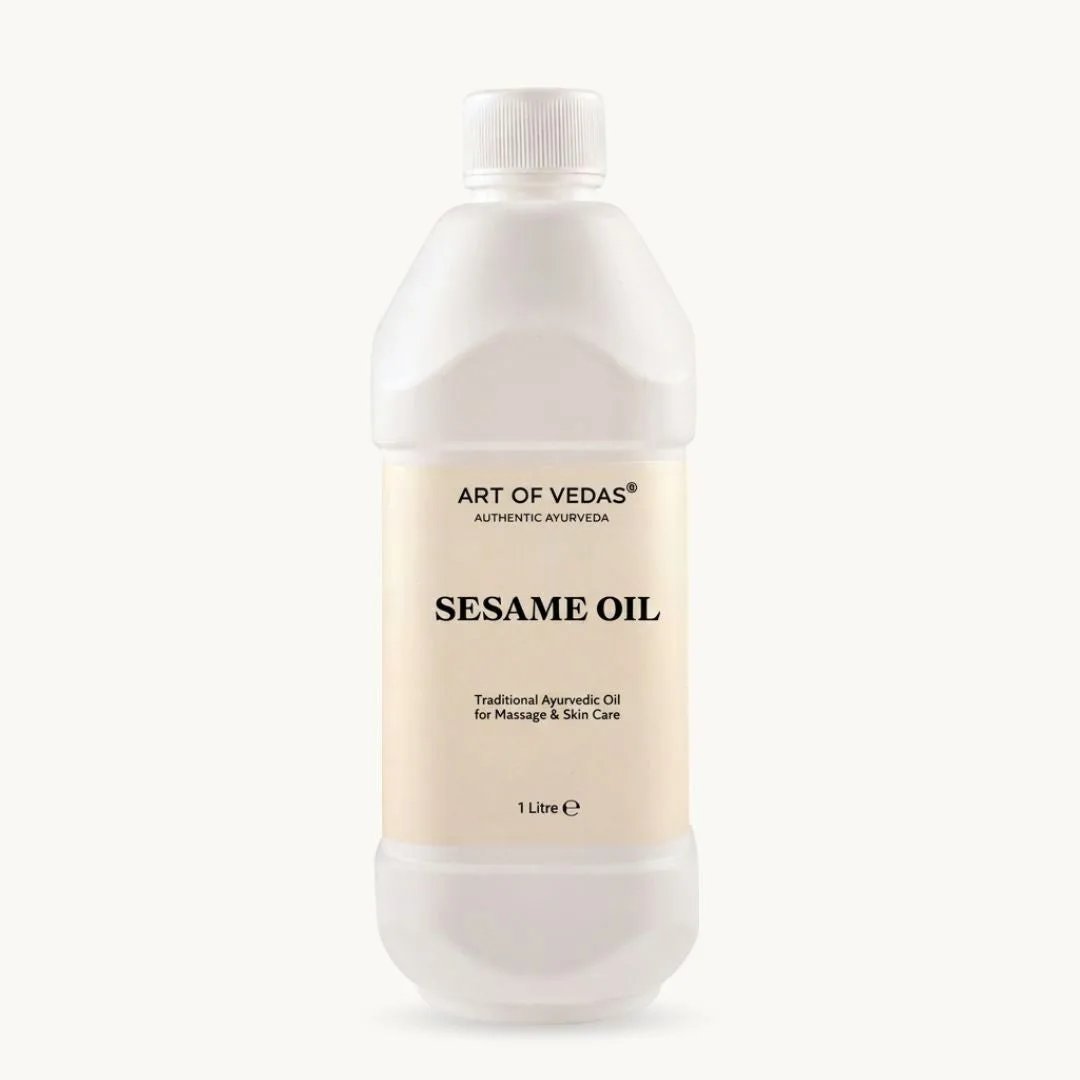
Third: treating it like an oil for full-body Abhyanga. The semi-solid format is designed for targeted local application. For the flowing, whole-body morning ritual, use a proper massage oil, and choose it with our Abhyanga oil selection guide. A plain cold-pressed sesame oil is the classical base for that practice, and it is also what you reach for if you ever find a Kuzhambu too rich and want to soften a session. When you are ready to bring the two traditions together, the classical full-body sequence is described in our guide to classical Abhyanga with a Kuzhambu.
Frequently Asked Questions
Do I warm the jar every time?
Yes, a few minutes in hot water before each session. Never microwave the jar or place it over direct heat.
How much do I use in one session?
About a teaspoon per body region. Two regions, two teaspoons. If the skin still looks thickly coated after the massage, you used more than needed.
Before the shower or after?
After. Shower first, apply to warm dry skin, rest, then wipe off. This is the reverse of the classical oil routine, and it is the single point beginners most often mix up.
Which towels should I use?
Keep two or three old cotton towels only for massage. The rich base leaves marks that ordinary washing may not fully remove from fine fabrics.
How often should a beginner practise?
Twice a week is a comfortable start. Once the routine feels natural, let it grow towards daily evening use if your schedule allows.
Can I use it in the morning?
You can, provided the twenty-minute rest fits before dressing. Most people find the evening more practical for the format.
This article describes traditional Ayurvedic practice for general information and personal care. It is not medical advice. If you are pregnant, have a health concern or know your skin reacts easily, please speak with a qualified professional before beginning a new routine.