Choosing between a Kansa wand and a Gua Sha is one of the most common questions in Ayurvedic facial self-massage, and the honest answer depends on the ritual you want to keep. Both are traditional tools, both are used with a little oil, and both ask for a few unhurried minutes at the beginning or the close of the day. This guide places the bronze Kansa wand beside the stone Gua Sha so you can decide which one suits your face, your skin and the routine you already enjoy.
What each tool is
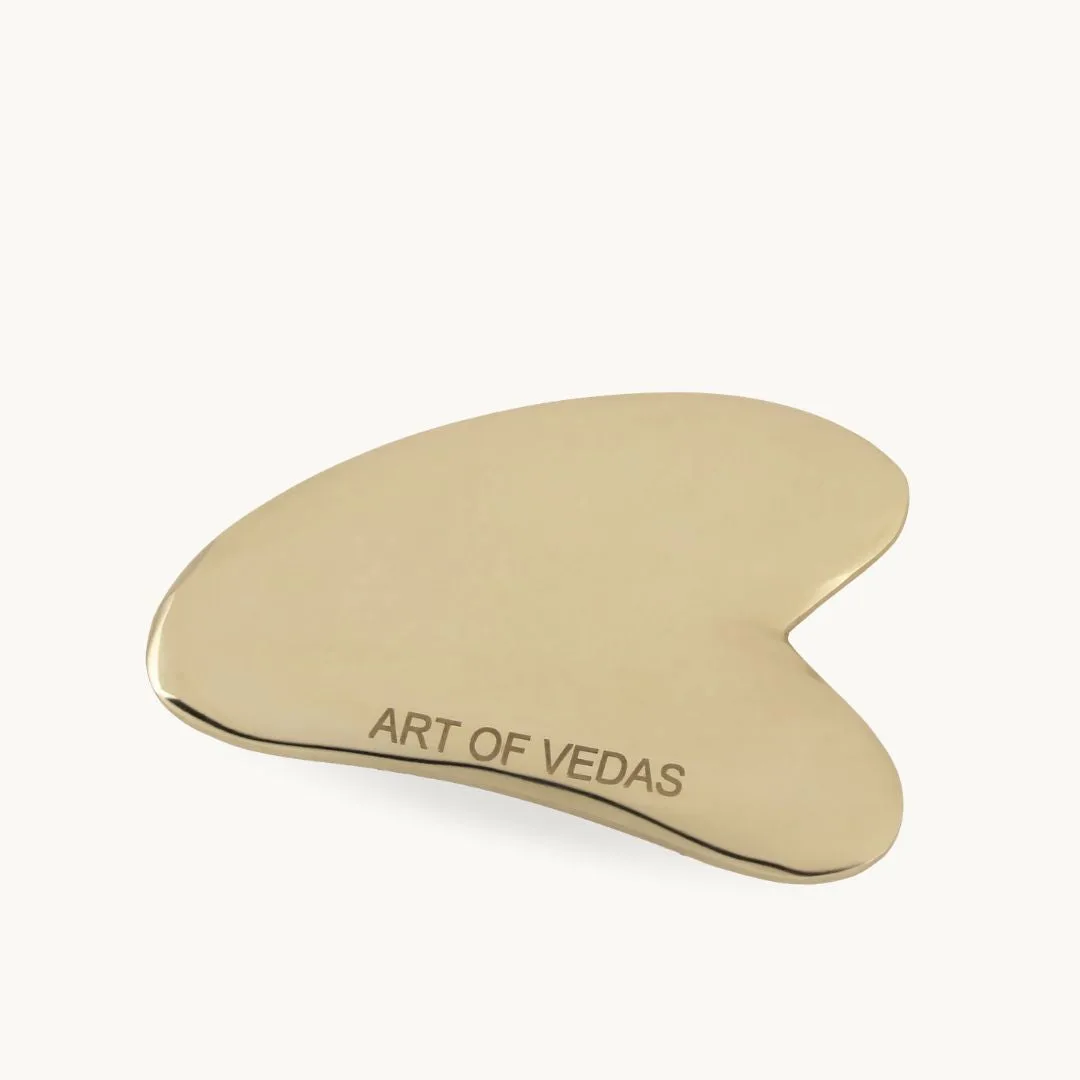
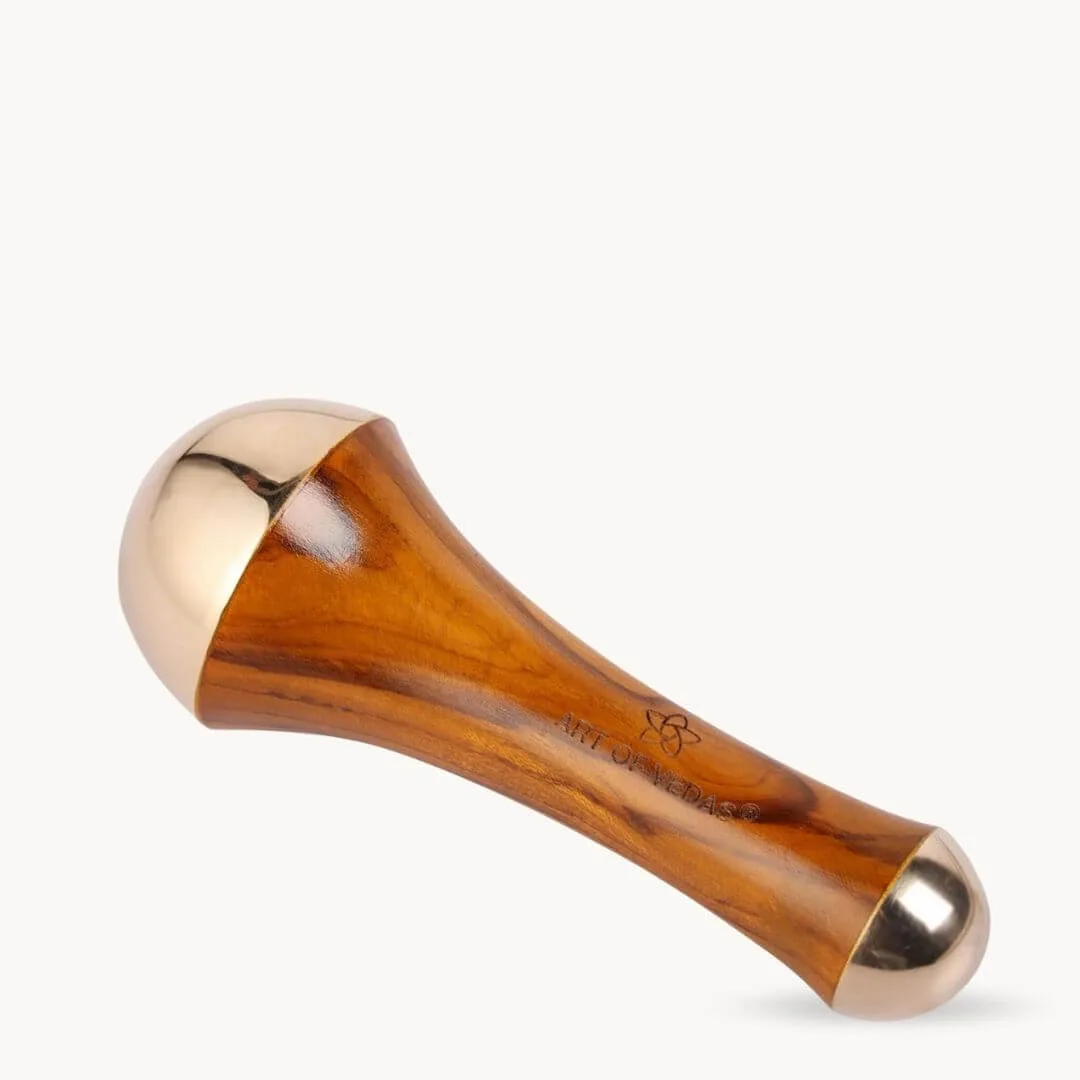
A Kansa wand is a smooth bronze dome set on a turned wooden handle. Kansa is the traditional name for bronze, the copper and tin alloy that Ayurveda has valued for generations. The rounded head is drawn over oiled skin in slow, repeated passes, following the natural contours of the face. A Gua Sha is a flat hand held stone with a shaped working edge, a tool of East Asian origin that has been widely adopted into modern facial care. The wand offers a single rounded point of contact and a warming metallic feel; the Gua Sha offers a long edge and several curves cut to sit against the jaw, the cheekbone and the brow.
The tradition behind each
In Ayurveda, bronze tools belong to the wider practice of Abhyanga, the ritual of massaging the body and face with oil. The Kansa wand is a compact expression of that idea, letting the hand rest while the metal continues the stroke. It is also used lightly over the traditional Marma points of the face, the vital energy points that classical Ayurveda maps across the head. The Gua Sha carries its own lineage from a different culture, and it is fair to name that openly. Many people who love Ayurvedic ritual still keep a Gua Sha for edge work along the jaw, and there is no contradiction in owning both. Art of Vedas offers each so you can build the routine that feels right rather than the one a single tradition dictates.
How the techniques differ
With the wand, warm a few drops of facial oil in the palms, press them into cleansed skin, then move the dome upward and outward in short, even strokes from the centre of the face toward the ears. Keep the pressure gentle and let the bronze do the gliding. With the Gua Sha, hold the stone almost flat to the skin, anchor with the other hand, and sweep the edge along the same upward and outward lines in longer draws. The wand invites small circles around focused areas; the stone invites long, sculpting lines. Neither should ever drag on dry skin, which is why an oil layer is part of both methods.
- The bronze dome offers a warm, grounding sensation that many find calming in an evening ritual.
- The stone edge stays cool to the touch and suits a brisk, refreshing morning pass.
- The wand reaches focused points and the curve of the nose with ease.
- The Gua Sha follows the long line of the jaw and neck in single sweeps.
- Both turn a plain application of oil into a slow, sensory pause in the day.
On material and craft, the two tools could hardly be more different. The Kansa wand is cast bronze, buffed to a soft shine, and fitted to a wooden handle that keeps the metal at a comfortable distance from the hand. Bronze may leave a faint grey trace on the skin as it interacts with the oils, a harmless cosmetic effect that wipes away. The Gua Sha is cut and polished from stone, cool and smooth, with edges rounded so they sit kindly against the face. Each rewards simple care: wipe clean, dry fully, and store somewhere the surface will not be knocked.
Which should you choose?
If you want a warming, meditative tool that pairs naturally with oil and touches the Marma points, begin with the Kansa wand, and the compact Kansa wand mini is an easy way to start. If you prefer cool, sculpting edge work and longer strokes, the Gua Sha is your tool. Many readers keep both and reach for whichever matches the mood of the day. To go deeper, read our guide to what a Kansa wand is, our note on the Gua Sha from an Ayurvedic perspective, and the wider Garshana, Kansa and Gua Sha tool chooser for how these fit alongside dry massage.
Frequently Asked Questions
Can I use the same oil with both tools?
Yes. A light facial oil suits both. Warm a few drops in the palms, press onto clean skin, and only then begin, so the tool always glides rather than drags.
Is the Kansa wand or the Gua Sha better for beginners?
Both are beginner friendly. The wand is very forgiving because the dome cannot present a hard edge, while the Gua Sha rewards a little practice in holding the stone flat.
Why does the bronze leave a grey mark?
The faint grey is a natural interaction between the bronze and the oils on the skin. It is purely cosmetic and wipes away with a cloth.
How often can I use them?
A few minutes daily suits most people, morning or evening. Listen to your skin and pause if it ever feels tender.
Do I need both?
No. Either tool stands on its own. Owning both simply gives you a warm option and a cool option for different days.
For external use only. Not a substitute for professional medical advice.