A Kansa and Marma face points routine brings two traditions together in one quiet ritual: the bronze tool of Ayurvedic massage and the vital points that classical texts map across the face. Marma points are the traditional energy points of the body, and gently touching those on the face with a bronze tool is a long standing self-care practice. With a Kansa marma wand and a little oil, you can follow a simple sequence of seven gentle points in a few unhurried minutes.
What Marma points are
In Ayurveda, Marma points are places where the tissues of the body are said to meet in a concentrated way, points traditionally treated with respect and a light hand. The face carries several of them, from the centre of the brow to the hollows beside the nose and the hinge of the jaw. This routine is a gentle, sensory massage practice over those traditional points, nothing more clinical than that. It is a way of pausing, breathing and giving the face a few minutes of slow attention. To understand the wider map, our complete guide to Marma points and the closer look at the Marma points of the face set the scene.
Preparing for the routine
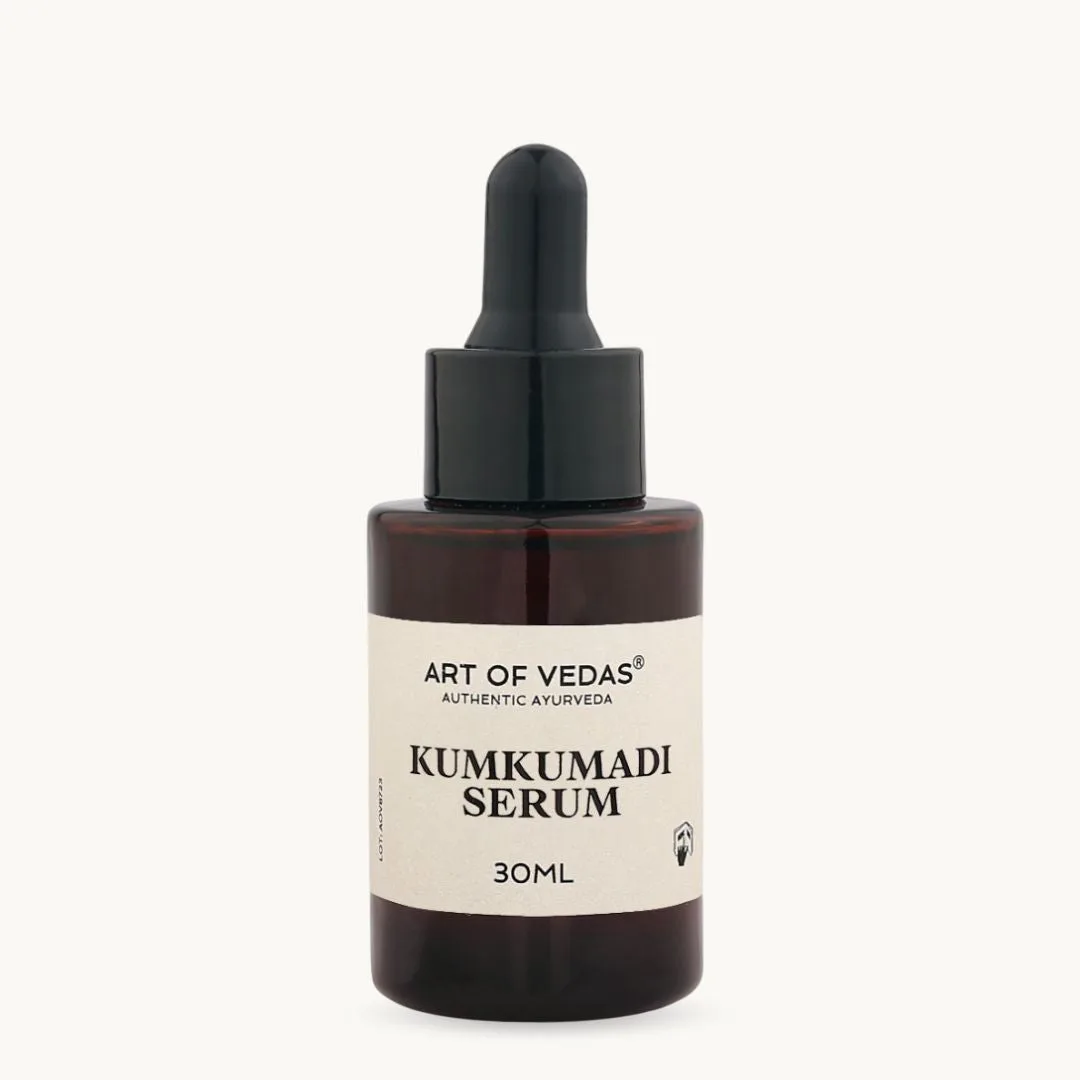
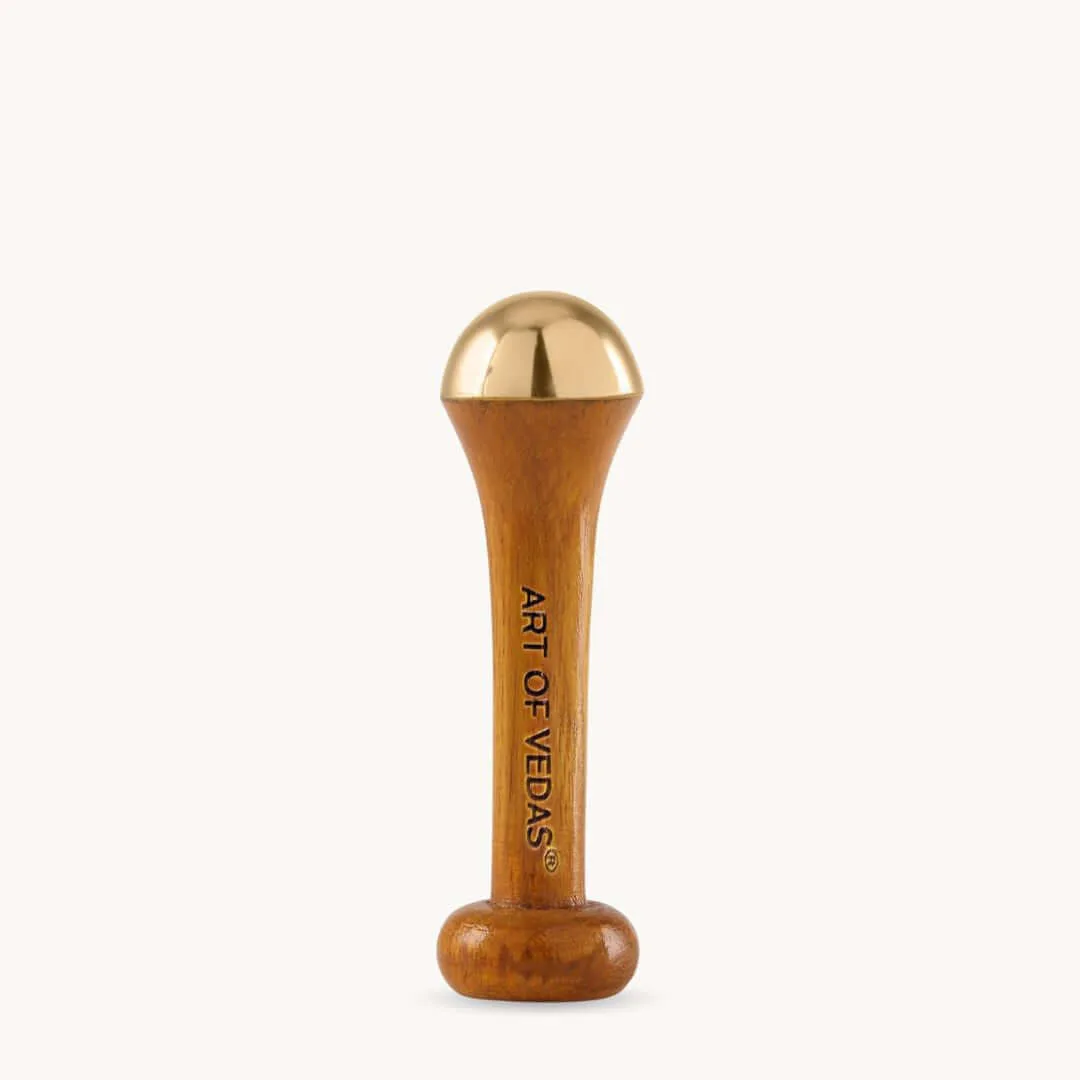
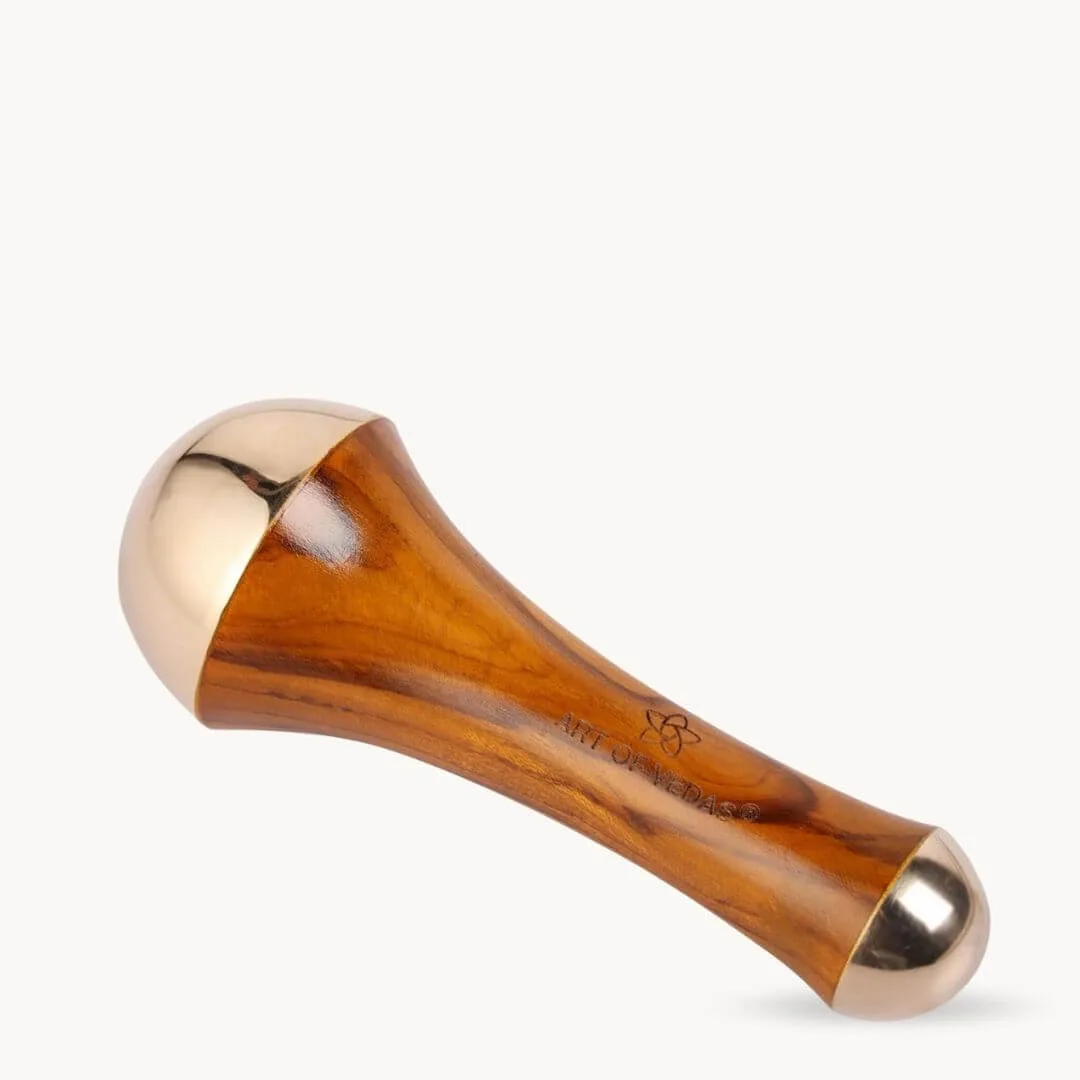
Begin with clean skin and a calm moment. Warm two or three drops of a facial oil or serum in the palms and press them onto the face so the wand will glide. A light, refined oil such as Kumkumadi serum suits this ritual well. The fine tip of the marma wand is made for point work, while the rounded dome of the Kansa wand mini suits the softer sweeping strokes between points.
The seven point sequence
Rest the tool lightly at each point, hold for a few slow breaths, and make small, gentle circles. Never press hard; the touch should feel soft and settling.
- The centre of the brow, between the eyebrows, where the face often holds the day.
- The inner ends of the eyebrows, one gentle pause on each side.
- The temples, with the lightest circular touch.
- The hollows beside the nostrils, following the line of the cheekbone.
- The centre of the cheeks, sweeping slowly out toward the ears.
- The hinge of the jaw, just below the ears, where tension gathers.
- The centre of the chin, to close the sequence.
Finish by sweeping the dome gently upward and outward across the whole face, then rest your palms over the eyes for a breath or two.
On the tool, the Kansa marma wand is cast bronze tapered to a smooth, fine point and set on a turned wooden handle. Bronze is the copper and tin alloy Ayurveda has long favoured, and its gentle weight lets the point rest on the skin without effort from the hand. A faint grey trace from the metal is normal and wipes away. After the ritual, clean the tip, dry it fully and store it safely so the point stays smooth.
Building the habit
This routine sits happily at the end of a cleanse, morning or evening, and pairs naturally with a longer facial massage. Our step by step Kansa wand facial massage shows how to combine the point work with flowing strokes for a complete face ritual. Keep it slow, keep it gentle, and let the few minutes be a pause rather than a task.
Frequently Asked Questions
What is a Marma point in simple terms?
It is a traditional vital point that Ayurveda maps across the body. Touching the facial points gently with a bronze tool is a long standing self-care and massage practice.
How much pressure should I use on the face?
Very little. Rest the tool on each point and make soft circles. The touch should feel calming, never firm or sharp.
Which tool is best for facial Marma work?
The Kansa marma wand, with its fine tip, is made for point work. The rounded mini wand suits the sweeping strokes between points.
How often can I do this routine?
Daily is fine for most people. A few minutes after cleansing, morning or evening, is enough.
Do I need oil for the point work?
Yes. A few drops of facial oil or serum let the bronze glide and make the ritual more comfortable and sensory.
For external use only. Not a substitute for professional medical advice.