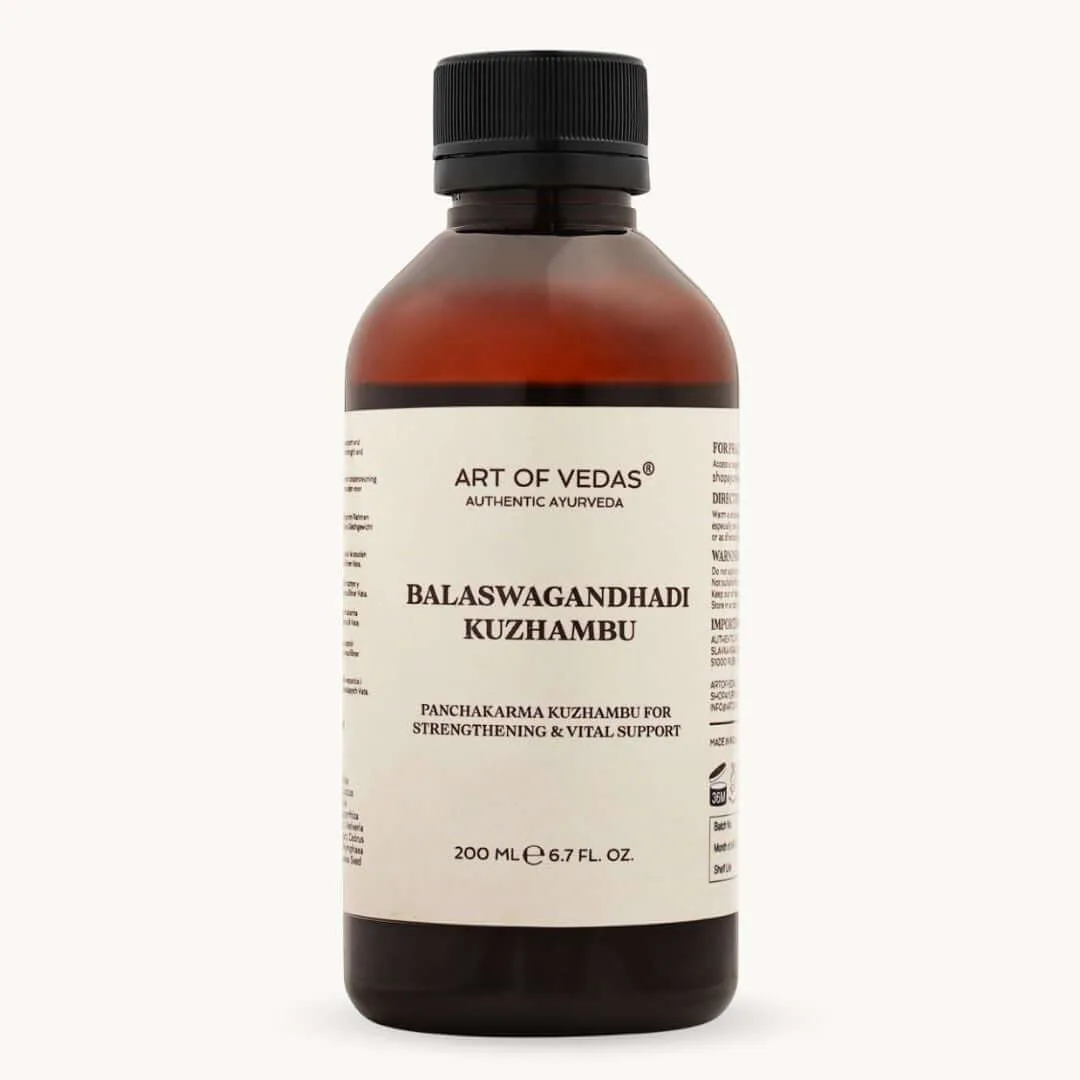
Le Balaaswagandhadi Kuzhambu réunit deux des plantes les plus respectées de la tradition ayurvédique de la force, Bala et Ashwagandha, dans le format semi-solide Kuzhambu que la pratique classique réserve à un travail corporel lent et concentré. Ce n'est pas une huile, il ne se comporte pas comme telle, et c'est précisément le propos: la préparation reste sur la zone traitée, s'absorbe progressivement et transforme un simple massage en un rituel plus long et plus réfléchi. Ce guide couvre la formule, son contexte traditionnel, le caractère du format et la manière de l'intégrer à une routine moderne.
Le nom et la tradition qui le porte
Le nom se lit en trois parties: Bala, Ashwagandha et la terminaison sanskrite "adi", qui signifie "et les autres". Bala, la plante Sida cordifolia, apparaît dans toute la littérature ayurvédique classique comme une herbe fondatrice des préparations destinées au corps physique. Ashwagandha, Withania somnifera, possède un dossier tout aussi ancien dans la tradition Rasayana, la branche de l'Ayurveda consacrée à la nutrition et à la stabilité. Les formules de cette famille figurent dans les compendiums classiques et ont été préparées dans les foyers de Vaidya pendant des générations, le plus souvent sous forme d'huile de massage, et sous la forme plus riche du Kuzhambu pour un travail plus concentré.
Ce qui distingue le format Kuzhambu
Un Kuzhambu est préparé sur une base de trois corps gras, classiquement le sésame, la noix de coco et le ricin, cuits ensemble avec des décoctions d'herbes et des pâtes fraîches jusqu'à évaporation de l'humidité, puis refroidis jusqu'à une prise dense et souple. Contrairement à un Thailam, il ne se verse pas. Réchauffé au bain-marie, il s'assouplit et se répartit, puis demeure en couche fine sur la peau au lieu de s'écouler. L'absorption est lente par conception, ce qui convient à des séances de vingt à trente minutes sur une seule région. Pour une comparaison complète des deux formats au sein de cette famille de formules, voyez Balaaswagandhadi Kuzhambu et Thailam.
Place traditionnelle dans la routine
Dans la pratique classique, cette préparation est associée au versant exigeant de la vie quotidienne: le travail des champs autrefois, l'entraînement et les longues journées de travail aujourd'hui. Le Balaaswagandhadi Kuzhambu est traditionnellement apprécié pour:
- Le massage lent et concentré des épaules, des bras, des cuisses et des mollets après un effort physique
- Les rituels de récupération après l'effort, fondés sur la chaleur, le repos et un toucher sans hâte
- Les routines du soir pendant les mois plus froids, lorsque les textures plus riches sont traditionnellement préférées
- Les séances prolongées où la préparation doit rester en place plutôt que de s'absorber d'un coup
- Un sentiment général de nourriture pour la peau et le corps au sein d'une routine orientée vers la force
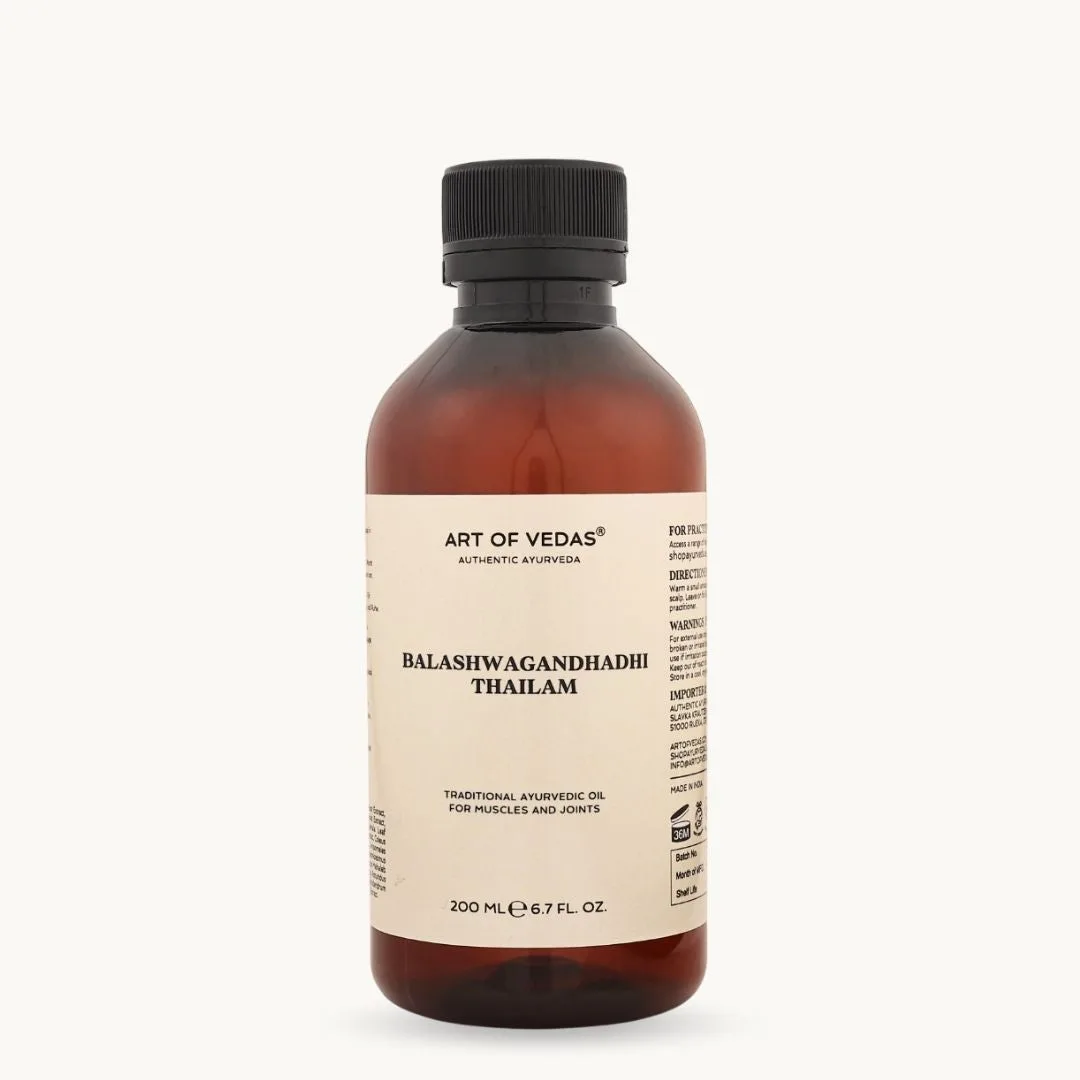
Son pendant fluide, le Balaswagandhadi Thailam, sert la même tradition dans l'Abhyanga du corps entier, et beaucoup de foyers gardent les deux formats côte à côte.
La composition, décrite simplement
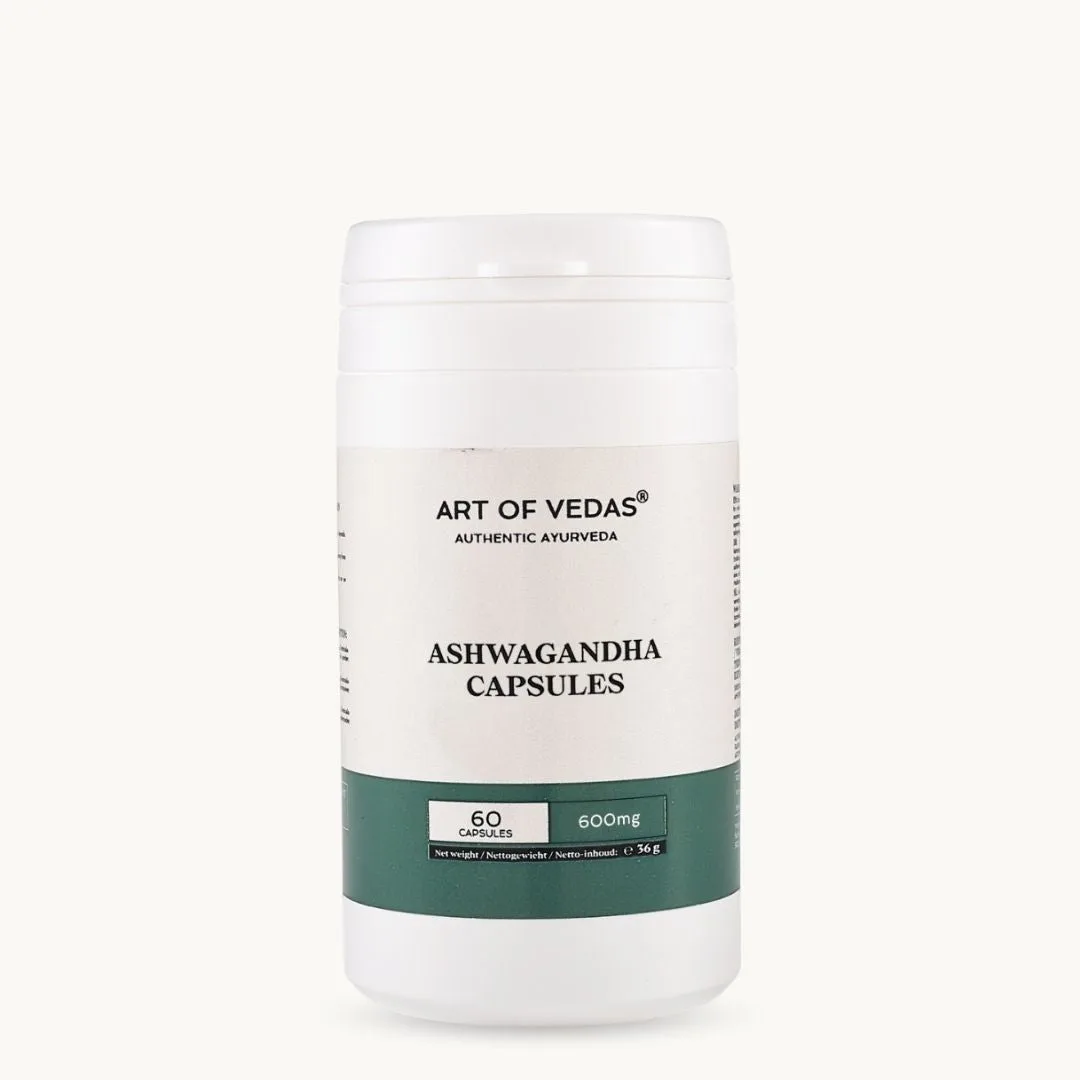
Le cœur de la formule est le duo déjà nommé: Bala préparé en décoction et en pâte, Ashwagandha à ses côtés, et un ensemble de plantes classiques d'appoint cuites patiemment dans la base aux trois corps gras. Rien dans la méthode n'est rapide. Les corps gras portent la matière végétale, le feu doux réduit la teneur en eau, et la texture finale est le résultat naturel du refroidissement de cette base, non d'un épaississant ajouté. Ceux qui apprécient l'Ashwagandha pour lui-même gardent souvent aussi de la poudre d'Ashwagandha en cuisine, où la même plante sert le versant interne de la tradition.
L'intégrer à une routine moderne
Réchauffez le pot fermé dans de l'eau chaude, prélevez une cuillère à café par région et faites pénétrer par des gestes lents et fermes. Laissez agir vingt à trente minutes, restez au chaud, puis essuyez et rincez. La méthode complète, quantités et durées incluses, est exposée dans notre article pas à pas sur l'utilisation du Balaaswagandhadi Kuzhambu. La plupart des personnes s'installent dans un rythme de deux ou trois séances par semaine, ou d'une application nocturne sur les jambes pendant les périodes d'entraînement intensif.
Questions fréquentes
Le Balaaswagandhadi Kuzhambu convient-il à un usage quotidien?
Oui, dans le cadre d'une routine de soin personnel normale. Un usage quotidien le soir sur les jambes ou les épaules est courant dans la tradition; laissez le confort et le temps décider.
Convient-il au massage du corps entier?
Il peut s'employer plus largement, mais la texture semi-solide est vraiment faite pour un travail régional. Pour l'Abhyanga du corps entier, le format Thailam est le choix pratique.
Quelle est son odeur et quelle sensation procure-t-il?
Attendez-vous à un caractère chaud, herbacé et légèrement terreux, et à une sensation riche et enveloppante sur la peau. La préparation s'assouplit avec la chaleur du corps et laisse un fini nourri après le rinçage.
Qui se tourne généralement vers cette formule?
Les personnes dont la routine est physiquement active: celles qui s'entraînent, marchent sur de longues distances ou passent la journée debout, et quiconque préfère un rituel du soir plus lent et plus réfléchi.
Comment conserver le pot?
Gardez-le fermé, au frais et à l'abri de la lumière directe du soleil, et prélevez toujours avec les mains sèches ou une cuillère sèche. La prise semi-solide variera légèrement selon la température de la pièce; c'est normal.
Cet article décrit une pratique ayurvédique traditionnelle à titre d'information générale et de soin personnel. Il ne constitue pas un avis médical. Si vous êtes enceinte, si vous avez une préoccupation de santé ou si vous savez que votre peau réagit facilement, veuillez consulter un professionnel qualifié avant de commencer une nouvelle routine.