

UNLOCK 10% OFF
Kansa Body & Scalp Massage
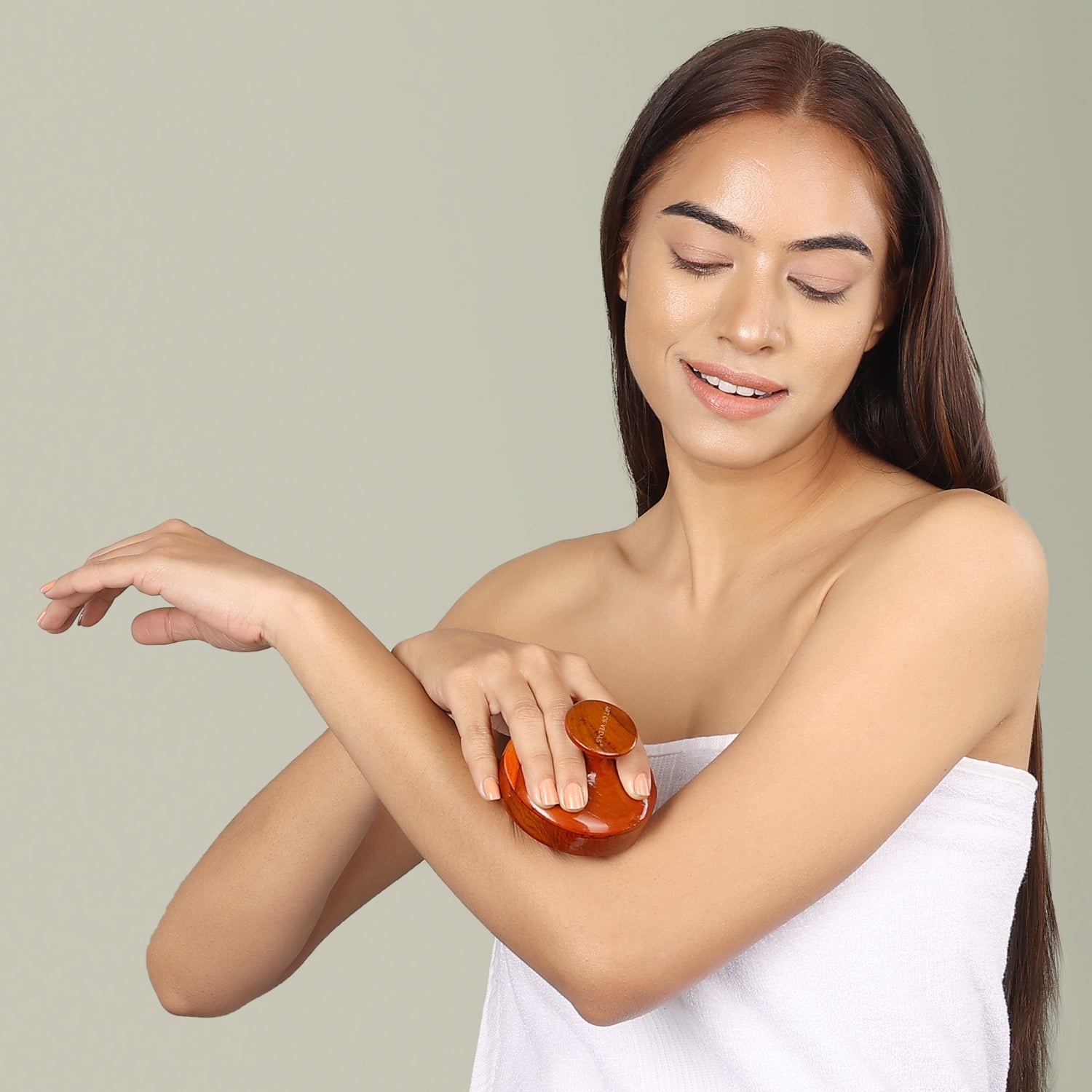
In Ayurveda, massage is a practice that goes beyond relaxation, it is considered a daily act of self-care that supports the body's natural sense of balance. Kansa is a traditional bronze alloy of copper and tin, used in Ayurvedic bodywork for centuries. Vedic texts describe Kansa metal as naturally cooling and balancing, particularly suited to calming excess Pitta. These handcrafted tools are designed for use after oiling the body, the smooth bronze surface glides across oiled skin, working gently into the muscles of the shoulders, back, arms, legs, and feet.
Explore the Kansa Body Massage Tools

Seven smooth Kansa nodes. A carved wooden handle. Pressure precisely where you need it.
This tool is made for two practices: Śiro Abhyanga, the classical Ayurvedic scalp massage, and marma point work on the body. The rounded nodes are shaped to sit accurately on a marma point and sustain contact there your shoulders, the base of your skull, your upper back, the soles of your feet. Used slowly, with oil, the Kansa draws excess heat from your tissue. You feel the release immediately.
On the scalp the nodes cover a broad area with each movement. On the body a single node locates the precise marma point. One tool, two practices, one material that Ayurvedic tradition has relied upon for this quality specifically: solid bronze cools. It calms your Pitta, settles your Vata.

An Ayurvedic foot-massage wand with a kansa (copper–tin bronze) dome and ergonomic hardwood handle. Used in Kansa Vatki/Padabhyanga to stimulate plantar marma points, support lymphatic flow, cool excess pitta, and relax the nervous system.

A hand cast Kansa (copper–tin bronze) bowl used in Padabhyanga and Kansa Vatki therapy. The natural cooling quality of kansa helps pacify pitta, soothe tired feet, and calm the nervous system while stimulating plantar marma points.

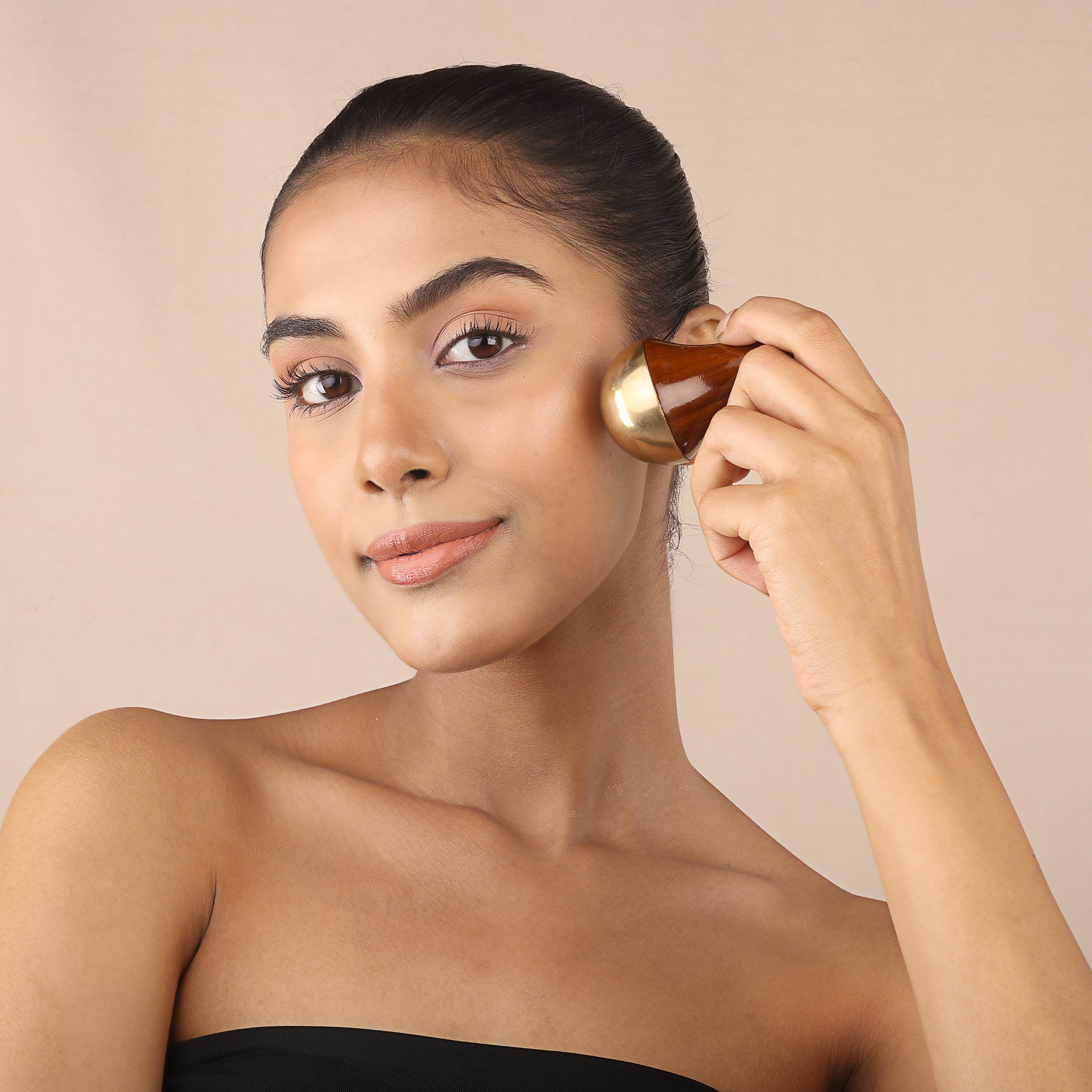
Two domes, each shaped for a different part of the face. The larger dome glides across cheeks, forehead and jawline, covering the broad, open areas in slow circular movements. The smaller dome turns for the precise work: temples, brow, under-eye, the edges of the nose.
The metal has a naturally cooling quality. In Ayurveda, this is traditionally associated with Pitta balance — a calming of warmth and reactivity in the skin. The faint grey-green tint you may notice during use is a natural reaction between the metal, the oil, and your skin's pH. It washes off easily and is not harmful.
Apply 3 to 4 drops of face oil before you begin. Work across both sides of the face, starting from the centre and moving outward. Gentle pressure is enough — the tool does the work. Five to ten minutes daily is ideal.
For external use only. Clean and dry thoroughly after each use. Store away from moisture.

The Mini Kansa Wand is cast from classical Kansa, a copper-tin bronze used in Ayurvedic facial practice for centuries. The dome is intentionally small sized to follow the orbital bone, reach the brow ridge, settle into the temple, and work the four marma points around the eye that a larger tool cannot address with precision.
Kansa has a naturally cooling quality. In Ayurveda, this is associated with calming Pitta, the accumulated heat that shows around the eyes as puffiness, sensitivity, and a dull, uneven complexion. Used with a face oil in slow, deliberate circles, the dome draws that heat outward and helps the oil absorb more completely than applying by hand.
This is the tool used in Netra Abhyanga, the traditional Ayurvedic eye-area ritual. At home, practiced for five minutes each morning or evening, it is one of the more quietly effective habits you can build into a daily routine.

The Kansa Comb is a scalp tool cast from Kansa metal, the copper-tin bronze used in Ayurvedic ritual practice for centuries. The teeth of the comb are pointed and designed to reach the scalp through the hair, making contact with the marma points of the head as the comb moves slowly across the scalp. This is not a massage tool used with pressure. The correct technique is slow, deliberate, and gentle, the pointed teeth do the work; you simply guide the comb.
Kansa has a naturally cooling quality. In Ayurveda, this is associated with calming Pitta in the head, the accumulated heat that shows as scalp sensitivity, irritation, and a restless, overheated mind. The comb draws that heat gently outward as it moves across the scalp.
This is a tool for daily use. Two to three minutes in the evening, used dry or with a light hair oil, is sufficient. Used consistently, it becomes one of the quieter and more grounding habits in a daily Dinacharya practice of Śīrṣa Abhyanga.

The Kansa Gua Sha is a facial massage tool hand-cast in Kansa metal, the traditional copper-tin bronze used in Ayurvedic practice. The form follows the gua sha technique: broad, deliberate strokes across the jaw, neck, cheeks, and forehead. The material is what sets it apart from stone tools.
Kansa has a naturally cooling quality. In Ayurveda, this is associated with calming Pitta, the heat and reactivity in the skin that shows as redness, puffiness, and an uneven complexion. Stone tools carry no such property. The Kansa draws warmth gently from the skin's surface as the tool moves across it, which is why the experience of working with it feels different in the hand.
Used with a face oil and slow, upward strokes, the Gua Sha helps the oil absorb evenly and leaves the skin looking calm and settled. It is a practice that takes five minutes and requires nothing more than a few drops of oil and a consistent routine.
Kansa Tools for Body, Scalp & Feet — Your Guide
Art of Vedas offers the Kansa Body Wand (a large dome tool for broad body strokes), the Kansa Vatki (a flat, foot-focused tool traditionally used for Pada Abhyanga), and the Kansa Scalp Massager (designed with multiple rounded nodes for head massage). Each tool serves a different purpose within the Abhyanga ritual.
Apply your chosen massage oil generously to the skin. Using medium pressure, move the body wand in long, sweeping strokes along the limbs (from extremities toward the heart) and circular motions on the joints. Spend extra time on areas of tension such as the shoulders, lower back, and calves. A typical session takes 10–15 minutes per body area.
Pada Abhyanga is the Ayurvedic foot massage ritual, considered especially important because the feet contain many marma points connected to the rest of the body. The Kansa Vatki is a flat-bottomed tool that is rubbed in firm circular motions on the sole of the oiled foot. This practice is traditionally done before bedtime to promote a sense of calm and relaxation.
The Kansa Scalp Massager is specifically designed for Shiro Abhyanga (head massage). Apply a small amount of hair oil to the scalp and use the tool with gentle pressure in circular motions across the entire scalp. This is traditionally practiced to support scalp health and as a calming ritual.
Yes. Ayurvedic Oil is essential when using any Kansa tool on the body. It provides the necessary glide and protects the skin from friction. Sesame-based oils or dosha-specific massage oils from Art of Vedas work well. Never use Kansa tools on dry, un-oiled skin.
Let customers speak for us


Love the Art of Vedas high quality products and there follow up with emails. Highly reliable. Highly recommended.

Products as described and shipped fast

Very good quality products and tools for ayurvedic treatments. I love Art of Vedas products.


snelle levering, en een goede kwaliteit


I ordered a Kansa Vatki Wand. Delivered the next day! And on a question I had if they had something in stock: yes, we'll be getting it for you from India. Great service.