

UNLOCK 10% OFF

Kansa Face Massage Ritual
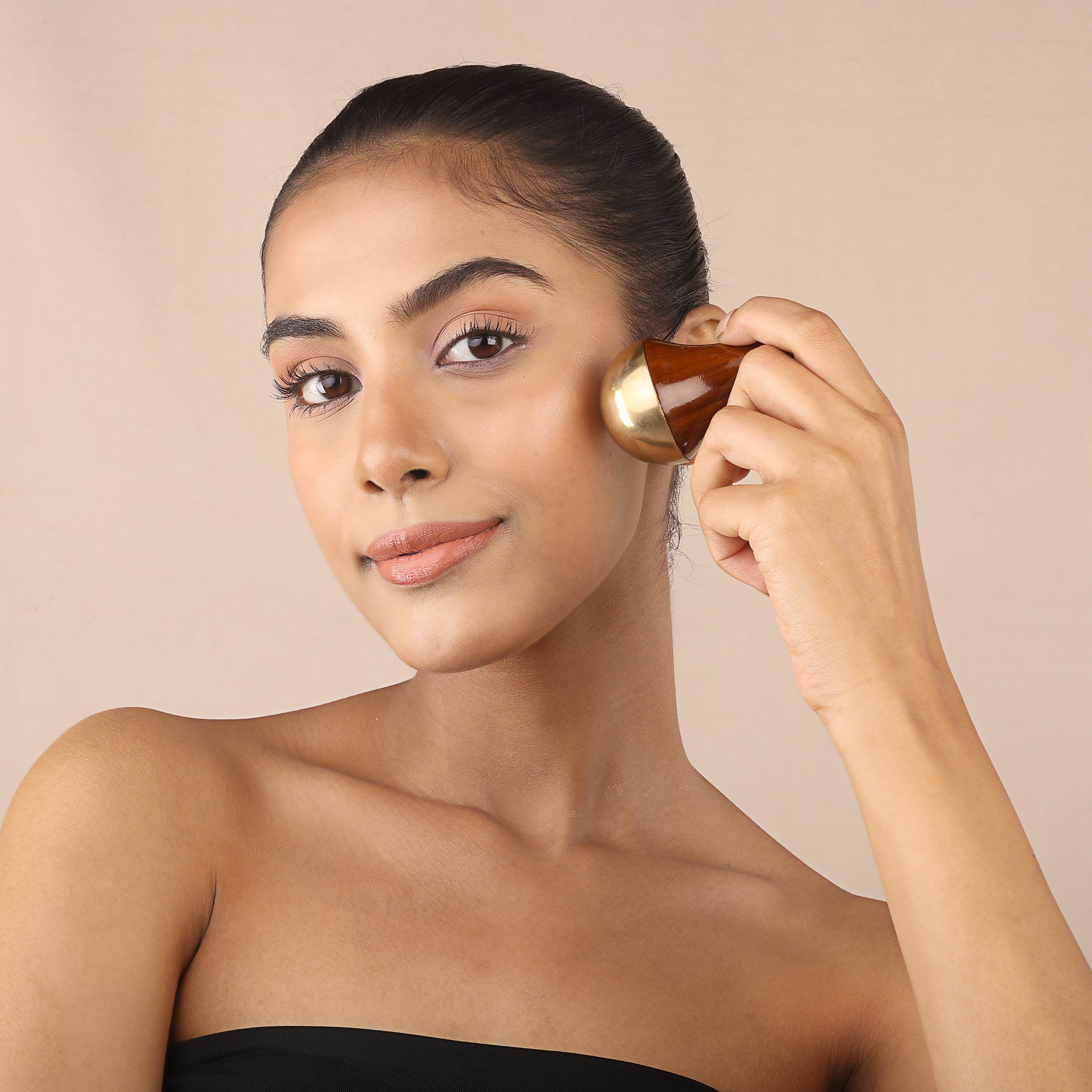
In Ayurveda, the face holds several marma points — energy centres connected to the brain, organs, and doshas. Massaging these points with the Kansa metal is traditionally believed to support the natural flow of energy in the face and promote a sense of calm during the massage.
The Kansa Face Ritual isn’t just a treatment. It is a meditative practice to release tension, refresh the skin, and restore your natural glow, all while connecting you with your inner state of balance.

Two domes, each shaped for a different part of the face. The larger dome glides across cheeks, forehead and jawline, covering the broad, open areas in slow circular movements. The smaller dome turns for the precise work: temples, brow, under-eye, the edges of the nose.
The metal has a naturally cooling quality. In Ayurveda, this is traditionally associated with Pitta balance — a calming of warmth and reactivity in the skin. The faint grey-green tint you may notice during use is a natural reaction between the metal, the oil, and your skin's pH. It washes off easily and is not harmful.
Apply 3 to 4 drops of face oil before you begin. Work across both sides of the face, starting from the centre and moving outward. Gentle pressure is enough — the tool does the work. Five to ten minutes daily is ideal.
For external use only. Clean and dry thoroughly after each use. Store away from moisture.

The Mini Kansa Wand is cast from classical Kansa, a copper-tin bronze used in Ayurvedic facial practice for centuries. The dome is intentionally small sized to follow the orbital bone, reach the brow ridge, settle into the temple, and work the four marma points around the eye that a larger tool cannot address with precision.
Kansa has a naturally cooling quality. In Ayurveda, this is associated with calming Pitta, the accumulated heat that shows around the eyes as puffiness, sensitivity, and a dull, uneven complexion. Used with a face oil in slow, deliberate circles, the dome draws that heat outward and helps the oil absorb more completely than applying by hand.
This is the tool used in Netra Abhyanga, the traditional Ayurvedic eye-area ritual. At home, practiced for five minutes each morning or evening, it is one of the more quietly effective habits you can build into a daily routine.

The Kansa Gua Sha is a facial massage tool hand-cast in Kansa metal, the traditional copper-tin bronze used in Ayurvedic practice. The form follows the gua sha technique: broad, deliberate strokes across the jaw, neck, cheeks, and forehead. The material is what sets it apart from stone tools.
Kansa has a naturally cooling quality. In Ayurveda, this is associated with calming Pitta, the heat and reactivity in the skin that shows as redness, puffiness, and an uneven complexion. Stone tools carry no such property. The Kansa draws warmth gently from the skin's surface as the tool moves across it, which is why the experience of working with it feels different in the hand.
Used with a face oil and slow, upward strokes, the Gua Sha helps the oil absorb evenly and leaves the skin looking calm and settled. It is a practice that takes five minutes and requires nothing more than a few drops of oil and a consistent routine.
Your Kansa Wand Questions Answered
A Kansa face massage (Mukha Abhyanga) is a traditional Ayurvedic facial technique using a tool made from Kansa bronze — an alloy of copper and tin used in India for thousands of years. The rounded tip is gently moved across the face to release tension, support circulation, and promote a healthy-looking complexion. It is typically performed after applying a facial oil.
During a Kansa massage, you may notice a faint grey-green tint on the skin. This is a natural reaction between the Kansa metal, the oil on your skin, and your skin's pH. It washes off easily and is considered in Ayurveda to be a sign that the metal is interacting with the skin as intended. It is not harmful.
Any facial oil works well with a Kansa wand. Art of Vedas Ruby Elixir (Kumkumadi Serum) and the Art of Vedas Ayurvedic Face Oil are popular choices because they provide enough glide for the tool to move smoothly and are formulated for facial use. Apply 3–4 drops to the face before starting the massage.
A daily routine of 5–10 minutes is ideal, typically in the evening as part of your wind-down ritual. If daily isn't practical, 3–4 times per week is a good starting point. Consistency matters more than duration — even a brief session supports the ritual.
Kansa is traditionally regarded as a skin-friendly metal in Ayurveda. However, if you have very reactive skin, start with short sessions (2–3 minutes) and use a gentle oil. Avoid using the wand over active breakouts or irritated areas. If irritation occurs, discontinue use and consult your skincare professional.
The Kansa Wand has a smooth, rounded dome tip that is ideal for circular strokes and targeted work around marma points on the face. The Kansa Gua Sha has a flat, contoured shape designed for broader sweeping strokes along the jawline, cheekbones, and forehead. Both tools are made from the same Kansa bronze alloy. Many customers use both the Gua Sha for sculpting strokes and the Wand for detailed, focused massage.
Shop Our Bestsellers


