



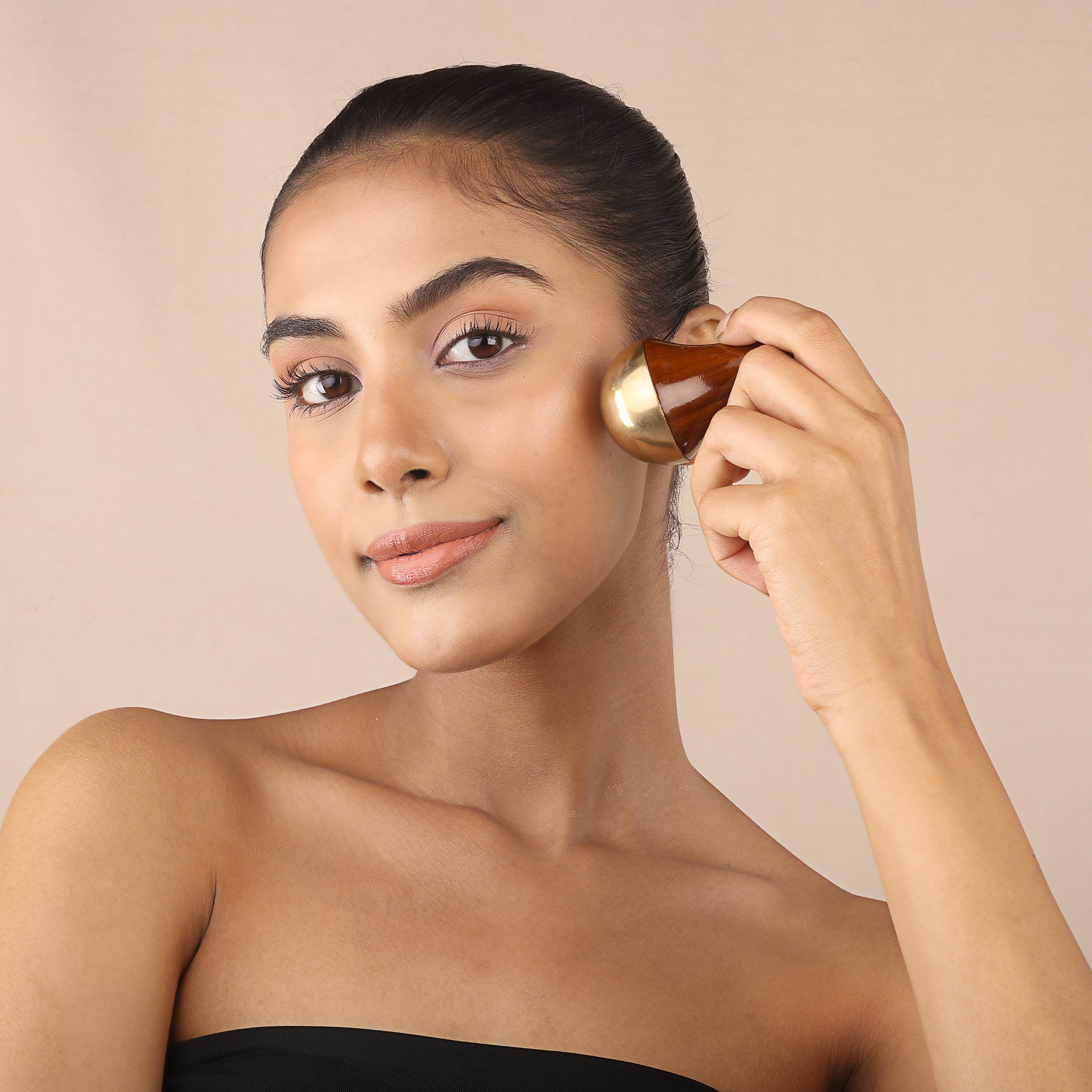
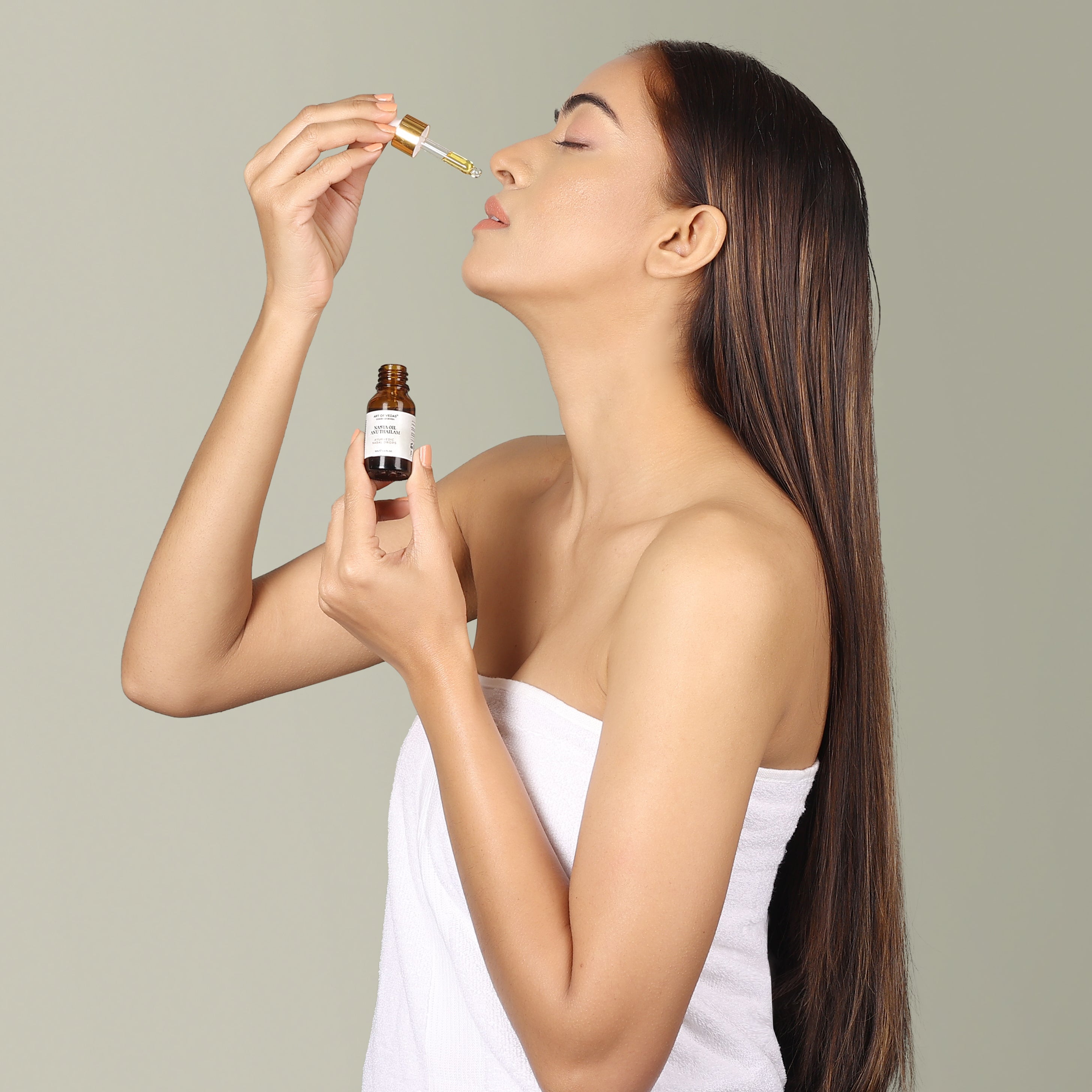

Abhyanga — The Ayurvedic Oil Massage Ritual
Rooted in classical Ayurvedic texts, Abhyanga is the daily ritual of warm oil self-massage. Warm the oil, apply it to the body, and work it into the skin with long, steady strokes, from the extremities toward the center. In Ayurveda, this practice is considered one of the most grounding and nourishing rituals you can do for yourself. The Charaka Samhita describes it as essential for maintaining the body's natural balance, particularly for those with a Vata constitution.

Art of Vedas Vata Massage Oil is a warming, deeply grounding Abhyanga blend formulated specifically for Vata-predominant constitutions and cold-weather self-massage rituals. Vata, governed by the elements of air and ether, is the Dosha most in need of regular oil application. The Charaka Samhita states that Abhyanga is one of the single most important practices for keeping Vata in balance, and this oil is designed to make that daily ritual as nourishing and comforting as possible.
The base combines almond oil, jojoba oil and olive oil to create a rich, slow-absorbing texture that gives the skin ample time to drink in moisture during the massage. The essential oil blend of patchouli, cedarwood, lavender and eucalyptus was selected for its warming, grounding aromatic profile. Patchouli and cedarwood bring earthy heaviness that directly counters Vata's light, mobile nature, while lavender supports a calm, settled state of mind. A touch of eucalyptus adds gentle clarity without disrupting the overall warmth.
For external use only. Not a substitute for professional medical advice. Patch test before first use. Discontinue if irritation occurs. Store in a cool, dry place away from direct sunlight.

Art of Vedas Pitta Massage Oil is a cooling, soothing Abhyanga blend formulated specifically for Pitta-predominant constitutions and warm-weather self-massage rituals. Built on a base of organic sesame oil (Tila Taila), the classical foundation of all Ayurvedic body oils, this formulation is infused with a carefully selected group of Pitta-pacifying herbs including neem (Azadirachta indica), sandalwood (Chandana), turmeric (Haridra), Indian madder (Manjistha) and holy basil (Tulsi).
The herb selection follows classical Pitta-balancing principles: cooling, bitter and astringent herbs that calm heat and support a clear, comfortable complexion. Sandalwood, described in the Ashtanga Hridayam as one of the foremost Pitta-pacifying aromatic substances, provides the oil with its distinctive calming fragrance. Neem and turmeric contribute their traditional Varnya (complexion-supporting) and Raktaprasadana (blood-soothing) qualities, while fennel and clove add gentle warmth to ensure the oil does not become excessively cooling.
For external use only. Not a substitute for professional medical advice. Patch test before first use. Discontinue if irritation occurs. Store in a cool, dry place away from direct sunlight.

Art of Vedas Tri Dosha Massage Oil is a balanced, harmonising Abhyanga blend formulated to suit all three constitutional types: Vata, Pitta and Kapha. Where the Vata and Pitta oils are designed for specific Dosha imbalances, this Tridoshic blend occupies the classical middle ground, neither too warming nor too cooling, neither too heavy nor too light. It is the ideal choice when you are unsure of your constitution, when your Dosha balance shifts with the seasons or when multiple family members share one oil.
The Charaka Samhita and Ashtanga Hridayam describe Abhyanga (traditional warm oil self-massage) as one of the most important daily practices in Dinacharya, suitable for every person regardless of constitution. This oil honours that universal principle with a carefully balanced formulation that nourishes the skin, supports healthy circulation of Prana and creates a calm, grounded state of mind. The aromatic profile is warm yet gentle, designed to be pleasant and balancing across all constitutional types and seasons.
For external use only. Not a substitute for professional medical advice. Patch test before first use. Discontinue if irritation occurs. Store in a cool, dry place away from direct sunlight.

This is the same classical Tila Taila that Ayurveda has relied on for thousands of years, now available in the volumes that professional practice demands. Art of Vedas Sesame Oil is cold-pressed and unrefined, offered in 1 litre and 5 litre formats for practitioners, clinics and Panchakarma centres who go through oil at a pace that smaller bottles cannot sustain.
The Charaka Samhita calls sesame oil the foremost among all oils. The Sushruta Samhita and Ashtanga Hridayam confirm it as the primary medium for Abhyanga, Shirodhara, Snehana and countless medicated oil preparations. When the classical texts speak of Taila without further qualification, they mean sesame. It carries inherent Ushna Virya (warming potency) and Guru, Snigdha Gunas (heavy, unctuous qualities), making it the classical choice for Vata pacification and the base in which most Thailams are prepared.
Use it for full-body Abhyanga, Shirodhara preparation, Snehana protocols, custom oil blends, or as a daily self-care oil. The 1-litre bottle suits a home practice or smaller clinic; the 5-litre format is designed for busy treatment rooms.
For external use only. Not a substitute for professional medical advice.

Few oils in the Ayurvedic tradition carry the depth and versatility of castor oil. Known as Eranda Taila, it is one of the most frequently referenced oils across the classical texts. The Charaka Samhita identifies Eranda as the foremost herb among those that pacify Vata Dosha, noting its Ushna Virya (warming potency) and its remarkable ability to penetrate into the fine tissue channels of the body. Where sesame oil is the king of full-body massage, Eranda Taila holds its own distinct place: thick, deeply penetrating and uniquely suited for targeted, localized application.
Art of Vedas Organic Castor Oil is cold-pressed from certified organic castor seeds (Ricinus communis) without hexane, chemical solvents or artificial processing. The result is a pure, unrefined oil with a rich golden colour and the characteristic viscosity that practitioners and self-care enthusiasts rely on. Its thick consistency means it stays where you apply it, making it ideal for joints, lower back, shoulders, dry skin areas, and scalp and hair care.
Apply a small amount to the area and massage with slow, circular motions. For scalp care, massage gently into the scalp and leave for thirty to sixty minutes before washing. A little goes a long way.
For external use only. Not a substitute for professional medical advice.

In the classical Ayurvedic tradition, sesame oil holds a singular place. Known as Tila Taila, it is referred to in the Charaka Samhita as the foremost among oils, valued above all others for its ability to nourish tissues, calm the nervous system and support the body's natural equilibrium. The Sushruta Samhita and Ashtanga Hridayam confirm it as the primary oil for Abhyanga (traditional warm oil body massage), citing its unique capacity to penetrate all seven tissue layers when applied with steady, rhythmic strokes.
Art of Vedas Organic Sesame Oil is cold-pressed from certified organic sesame seeds, preserving the full spectrum of natural fatty acids, antioxidants and sesame lignans. No chemical solvents, hexane processing or artificial refinement. Its inherently warming quality (Ushna Virya) makes it the classical choice for pacifying Vata Dosha, the principle most easily disturbed by cold weather, stress and irregular routines.
For practitioners, this oil serves as the traditional base for Abhyanga, Shirodhara preparation and Snehana protocols. For personal self-care, warm a small amount in your palms, massage from head to toe using long strokes on the limbs and circular movements over the joints, and allow fifteen to twenty minutes of absorption before bathing.
For external use only. Not a substitute for professional medical advice.

Experience deep moisturization and hydration, leaving your hands soft, smooth, and rejuvenated. The comforting aroma promotes relaxation, while the protective barrier shields your skin from environmental stressors. Suitable for all skin types, including sensitive skin, this chemical-free hand cream enhances your daily self-care ritual, providing effective skincare for nourished and revitalized hands. Embrace the power of nature and experience the ultimate Ayurveda-inspired, vegan skincare journey with our exquisite hand cream.

Indulge in the ultimate foot care with Art of Vedas Natural Foot Cream. Our vegan, Ayurveda-inspired formula provides powerful moisturisation and nourishment, leaving your feet soft and refreshed. Say goodbye to tired, cracked soles with this eco-friendly, chemical-free solution. Pamper your feet naturally, and order our cruelty-free foot cream now for a luxurious and revitalising experience. Give your feet the best in natural and organic self-care.
Choosing & Using Your Ayurvedic Massage Oil
Abhyanga is the Ayurvedic practice of warm oil self-massage. It is described in classical texts including the Charaka Samhita and Ashtanga Hridayam as one of the essential daily rituals (Dinacharya). The practice involves warming a dosha-appropriate oil and massaging it into the entire body using long strokes on the limbs and circular strokes on the joints.
Art of Vedas offers dosha-specific oils: the Vata Oil has a warming, grounding blend ideal for those who tend toward dryness and cold. The Pitta Oil is cooling and soothing, suited for those with warm, sensitive constitutions. If you are unsure of your dosha, take the free dosha test on our website, or try the Tri Dosha oil which is formulated to be balancing for all constitution types.
Yes. Warming the oil is an important part of the Abhyanga ritual. Place the bottle in a bowl of hot water for 2–3 minutes until the oil feels comfortably warm (not hot) on the inside of your wrist. Warm oil absorbs more easily and makes the massage experience more pleasant and effective as a self-care ritual.
The classical Ayurvedic recommendation is to practice Abhyanga in the morning before bathing, ideally as part of your Dinacharya routine. Apply the oil, massage for 10–20 minutes, then allow the oil to sit for 5–15 minutes before showering. Some people also enjoy an evening Abhyanga before bed for a calming wind-down ritual.
A full-body Abhyanga typically uses about 30–50ml of oil. Start with a generous amount on each area — legs, arms, torso, back — and work it into the skin with steady, rhythmic strokes. You should feel the oil coating the skin without dripping excessively. With practice, you will find the amount that feels right for your body.
Daily Abhyanga is the traditional recommendation. The Ashtanga Hridayam describes it as a practice that supports skin health, a sense of grounding, and overall physical comfort when done regularly. Even 10 minutes of self-massage makes a noticeable difference. If daily is not practical, 3–4 times per week is a good rhythm to maintain.


