A Kuzhambu asks for a little more thought in storage than a simple bottle of oil, because it is a semi-solid classical preparation rather than a free-flowing liquid. Kept well, it stays workable and pleasant to use across the seasons. Kept carelessly, its texture can wander and its working life shorten. This guide explains sensible shelf care so that a Kuzhambu behaves exactly as it should each time you reach for it.
Understanding the Semi-Solid Nature
The first thing to accept is that a Kuzhambu is meant to be thick. It is a concentrated, semi-solid preparation designed for warm, targeted application to a chosen area. Its consistency is part of the classical intent, not a flaw to be corrected. Because of this, the texture responds to temperature far more visibly than a thin oil does, and much of good storage is simply anticipating that response.
Why It Thickens When Cold
In cooler conditions a Kuzhambu firms up and can look quite solid. This is entirely normal. As the surrounding temperature drops, the semi-solid preparation stiffens, and as it warms it becomes soft and workable again. Nothing has gone wrong. To use a firm Kuzhambu, warm the closed container gently, for example by standing it in warm water, until the required amount softens. Avoid harsh or repeated overheating, which is unnecessary and unkind to the preparation. A gentle, patient warming is all that a cold Kuzhambu needs.
Sensible Storage Through the Seasons
- Keep the container closed when not in use, away from direct sunlight and strong heat.
- Store in a cool, stable spot rather than beside a stove or a sunny window.
- Expect firming in winter and softening in summer, and warm gently before use as needed.
- Scoop with a clean, dry implement rather than fingers to keep the preparation sound.
- Return the lid promptly so the surface stays protected between uses.
Hygiene When Scooping
The single habit that most protects a Kuzhambu is clean scooping. Because the preparation is semi-solid and used repeatedly from the same container, anything introduced on a finger or a damp spoon stays in contact with the surface. Use a dedicated, dry implement, take out only what you need, and close the container afterwards. Water is the main thing to keep out, so avoid scooping with wet hands or storing the pack in a steamy bathroom. These small courtesies keep the surface fresh and the whole container in good order for its working life.
Keeping a Kuzhambu at Its Best
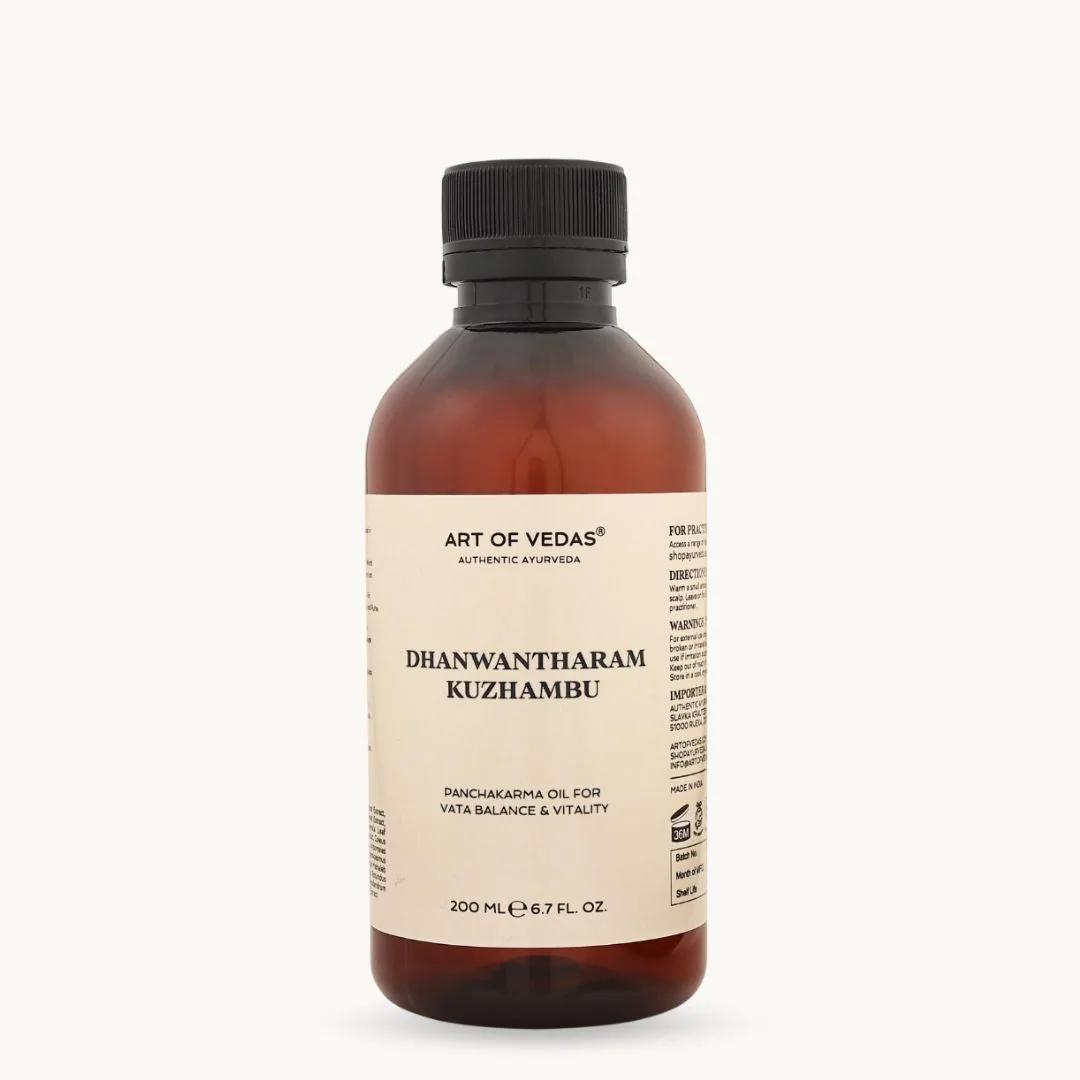
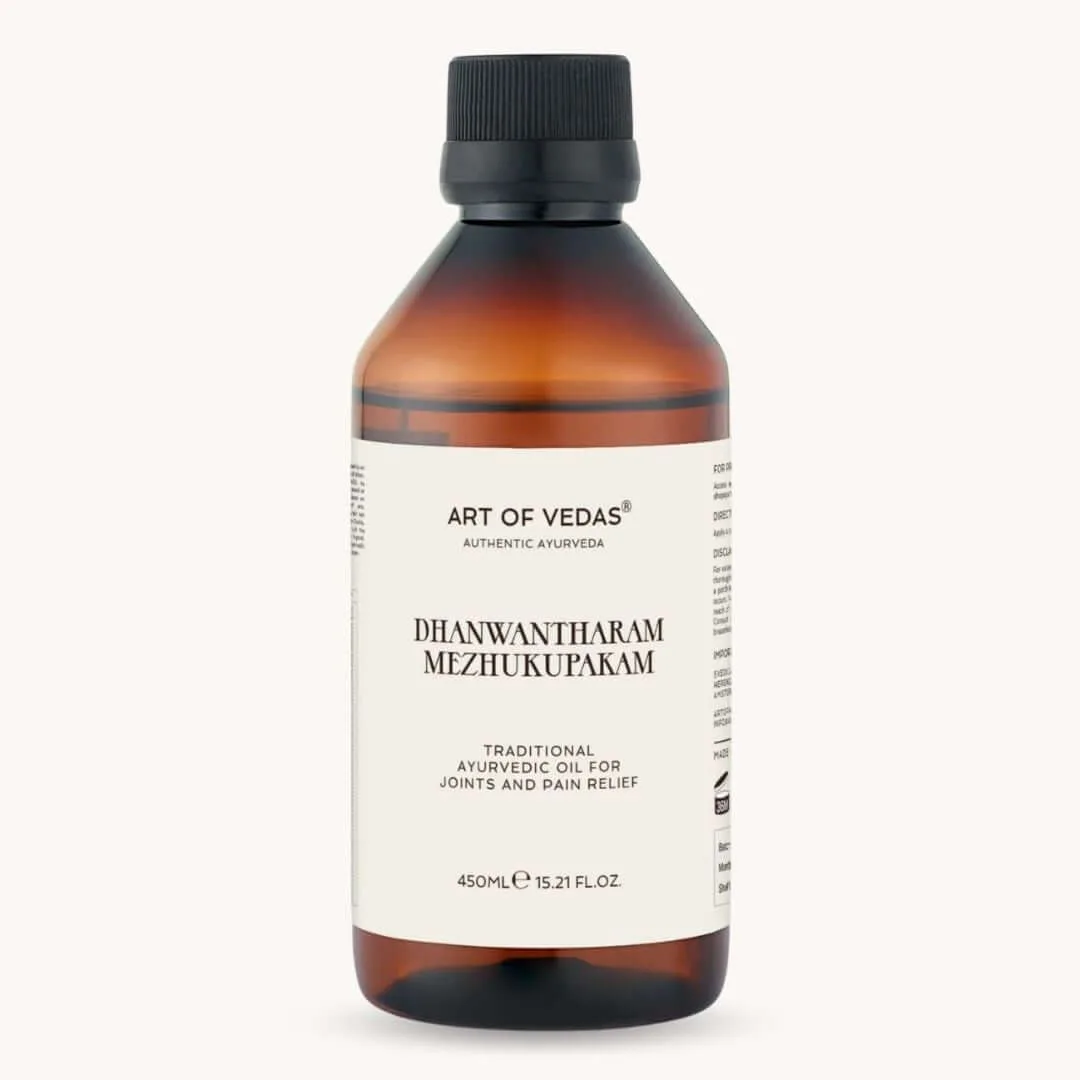
With a cool storage spot, clean scooping and gentle warming before use, a Kuzhambu remains a pleasure to work with. The same care applies across the Art of Vedas range, from a general preparation such as Dhanwantharam Kuzhambu to the reduced semi-solid Dhanwantharam Mezhukupakam. To understand the preparations themselves, read the Kuzhambu complete guide. For confidence in what you have bought, the guide on how to identify genuine Ayurvedic products is worth a look, and the Ayurvedic self-care tools guide covers the clean implements that make scooping easy.
Frequently Asked Questions
My Kuzhambu has gone solid. Is it ruined?
No. A Kuzhambu firms in cool conditions by nature. Warm the closed container gently until the amount you need softens, and it will be ready to use.
Should I keep a Kuzhambu in the refrigerator?
That is not necessary. A cool, stable cupboard away from heat and sunlight is ideal. Refrigeration will simply make it very firm and require more warming before use.
Can I warm it in a microwave?
Gentle warming in warm water is kinder and more even. Harsh or repeated overheating is unnecessary for a semi-solid preparation that softens readily with mild warmth.
Why does clean scooping matter so much?
Because the preparation is used repeatedly from one container, a clean dry implement keeps water and stray material out and protects the surface between uses.
How long does a Kuzhambu keep?
Follow the batch and shelf-life information on the pack. Good storage and clean scooping help the preparation stay in sound condition throughout that period.
Kuzhambu preparations from Art of Vedas are for external use only. They are personal care products, not medicines. For professional Panchakarma use, appropriate practitioner training applies. Consult a practitioner before use if pregnant or if you have a medical condition.