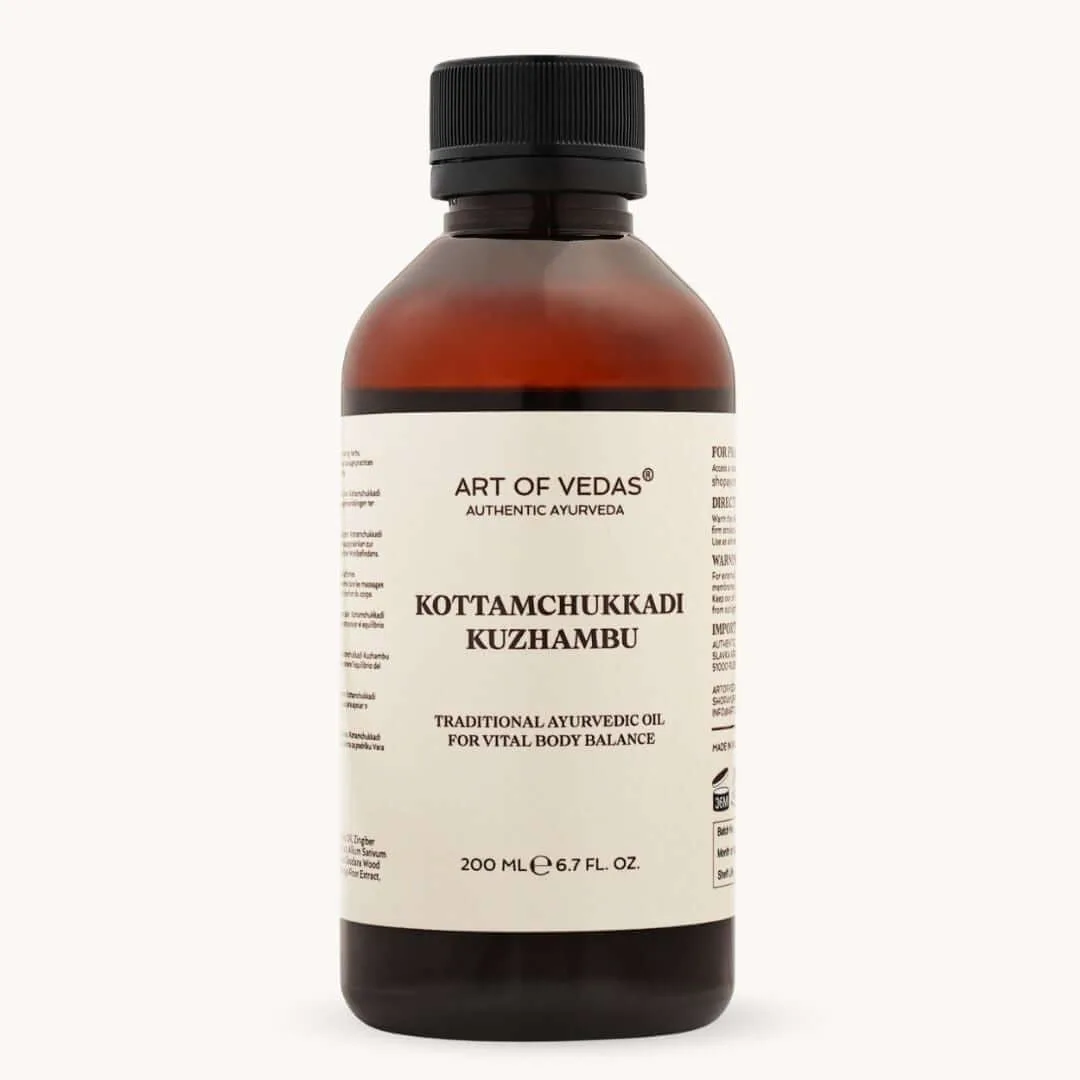
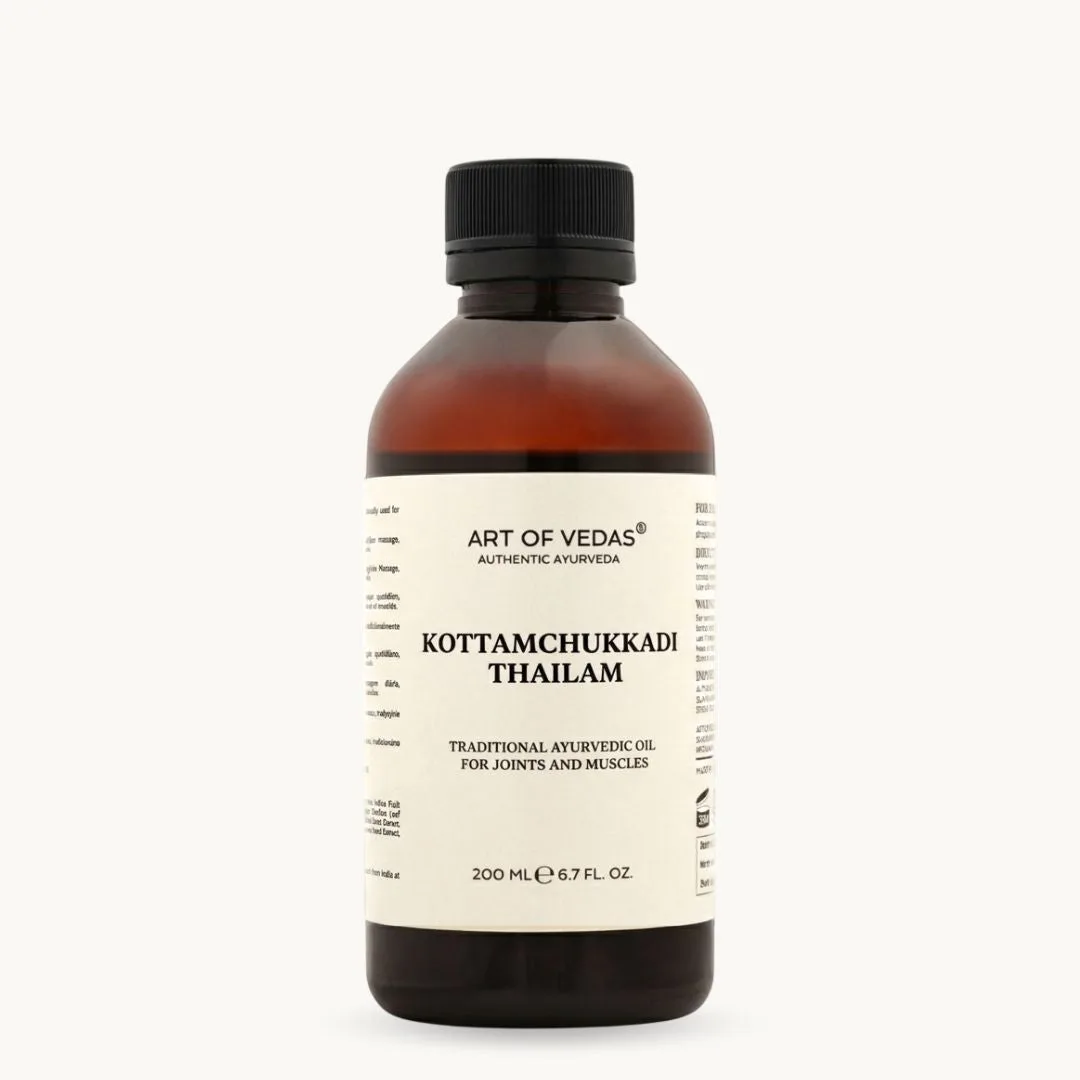
Kottamchukkadi behoort tot de geliefde verwarmende formules en is genoemd naar twee van haar bepalende ingrediënten, Kostam en Chukku, de gedroogde gember die haar veel van haar warmte geeft. Zij wordt in verschillende vormen bereid, en de Kuzhambu is de halfvaste uitvoering, ingekookt tot een dichte bereiding die blijft waar zij wordt gelegd. Deze gids bekijkt de Kottamchukkadi Kuzhambu in detail: wat zij is, waarin zij van de olie en het poeder verschilt, en hoe zij van oudsher wordt gebruikt.
Wat de Kottamchukkadi Kuzhambu is
Een Kottamchukkadi Kuzhambu is een verwarmende, halfvaste bereiding op de klassieke Kottamchukkadi-formule. Anders dan een Thailam, die een vrij vloeiende olie is, wordt de Kuzhambu gekookt en zo ver ingedikt tot zij dicht wordt en bij kamertemperatuur haar vorm behoudt. Dat maakt haar tot een geconcentreerde bereiding, die in een bepaald gebied wordt gewerkt in plaats van over het lichaam verspreid. Zij hoort bij de verwarmende groep Kuzhambus voor het onderlichaam, een familie waartoe ook de Sahacharadi-bereiding behoort die wij in onze gids over Sahacharadi beschrijven.
De verwarmende formule
Wat Kottamchukkadi onderscheidt, is haar uitgesproken verwarmende, aromatische karakter. De formule draait om Kostam en gedroogde gember, waar andere verwarmende kruiden bij komen, en juist die verbinding geeft de bereiding haar opwekkende gevoel. In ayurvedische termen is zij een verwarmende, stimulerende formule, van oudsher gekozen voor gebieden die stijf of koel aanvoelen en vaak verkozen in het koude seizoen en door wie naar Kapha of Vata neigt. Doordat een Kuzhambu de formule tot een dichte vorm verdicht, wordt haar verwarmende karakter naar een begrensde plek gedragen.
Hoe een Kuzhambu van de Thailam en het poeder verschilt
Kottamchukkadi is ongewoon doordat zij als olie, als Kuzhambu en als poeder verkrijgbaar is, wat haar tot een goed voorbeeld maakt van hoe de vorm het gebruik verandert. De Kottamchukkadi Thailam is de vloeibare olie, geschikt voor bredere toepassing en voor vloeiende massage. De Kuzhambu is de halfvaste vorm voor gerichte, blijvende toepassing. Het Kottamchukkadi-poeder is de droge kruidenmengeling voor warme kompressen en andere bereidingen. De verschillen tussen de olie en het halfvaste komen aan bod in onze vergelijking van Kottamchukkadi Kuzhambu en Thailam.
De toepassing
Een Kottamchukkadi Kuzhambu wordt zacht verwarmd tot zij zacht wordt; daarna werkt men een kleine hoeveelheid met trage, gelijkmatige streken in het gekozen gebied. Doordat zij halfvast is en aan de huid hecht, volstaat weinig, en men laat haar bezinken in plaats van haar snel in te wrijven. De onderrug, de knieën en de schouders zijn de meest gekozen plekken. Nadat de bereiding is ingetrokken, sluit een warm bad de routine af. Zoals alle verwarmende formules wordt zij op bepaalde gebieden aangebracht en niet over het hele lichaam.
Het volledige Kottamchukkadi-drietal
De olie, de Kuzhambu en het poeder worden meestal samen gedacht. Elk draagt dezelfde verwarmende formule in een andere vorm, en in de overgeleverde praktijk worden zij naast elkaar gebruikt. Vooral het poeder staat centraal in het werk met warme kompressen, het Kizhi, dat wij beschrijven in onze gids over Kottamchukkadi-poeder, olie en Kizhi. Wie het drietal bij de hand heeft, kan hetzelfde verwarmende beginsel toepassen in de vorm die een routine op dat moment vraagt.
Een Kottamchukkadi Kuzhambu biedt:
- Een uitgesproken verwarmende, aromatische formule rond Kostam en gedroogde gember.
- Een dichte, halfvaste structuur die op het aangebrachte gebied blijft.
- Gerichte zorg voor gebieden die stijf of koel aanvoelen, zoals de onderrug en de knieën.
- Een vanzelfsprekende aansluiting bij routines van het koude seizoen en van de avond.
- Een plaats binnen het volledige Kottamchukkadi-drietal van olie, Kuzhambu en poeder.
Wat de ingrediënten betreft, draagt de Kottamchukkadi Kuzhambu haar verwarmende kruiden, aangevoerd door Kostam en Chukku, in de klassieke basis van drie vetten van sesam, kokos en ricinus, gekookt met het kruidenafkooksel en ingedikt tot een halfvaste massa. Er wordt geen was toegevoegd, want de dichtheid ontstaat uit het trage inkoken. De kruidenmengeling is wat haar onderscheidt van de koelere, meer voedende Kuzhambus, en dezelfde mengeling loopt door de Kottamchukkadi-olie en het poeder heen.
Veelgestelde vragen
Wat betekent Kottamchukkadi?
De naam komt van haar bepalende ingrediënten, Kostam en Chukku, de gedroogde gember die de formule veel van haar verwarmende karakter geeft. Andere verwarmende kruiden maken de mengeling compleet.
Is de Kuzhambu sterker dan de Thailam?
Zij is dichter en in vorm geconcentreerder, maar de kruidenformule is dezelfde. De Kuzhambu draagt die formule eenvoudigweg naar een begrensde plek, terwijl de Thailam zich makkelijker verspreidt.
Op welke gebieden wordt zij van oudsher gebruikt?
De onderrug, de knieën en de schouders zijn de meest gekozen gebieden, naast andere plekken die stijf of koel aanvoelen. Zij wordt op bepaalde gebieden aangebracht en niet over het hele lichaam.
Wanneer is het beste moment om haar te gebruiken?
Verwarmende formules passen bij het koude seizoen en bij de avond. Een Kottamchukkadi Kuzhambu wordt vaak verwarmd en vóór een warm bad aan het einde van de dag aangebracht.
Mag ik de olie, de Kuzhambu en het poeder samen gebruiken?
Ja. Zij dragen dezelfde verwarmende formule in verschillende vormen en worden van oudsher naast elkaar gebruikt, waarbij het poeder voorbehouden blijft aan het werk met warme kompressen.
Uitsluitend voor uitwendig gebruik. Geen vervanging voor professioneel medisch advies.