Abhyanga, the practice of anointing the body with warm medicated preparations, sits at the heart of classical's Ayurvedic tradition. Most people first meet it as a flowing oil massage using a liquid Thailam. In classical, however, the same daily ritual is often carried out with a Kuzhambu, the semi-solid preparation that behaves quite differently on the skin. Working with a Kuzhambu asks for a slower, more deliberate approach, applied region by region rather than poured over the whole body at once.
What classical Abhyanga Means
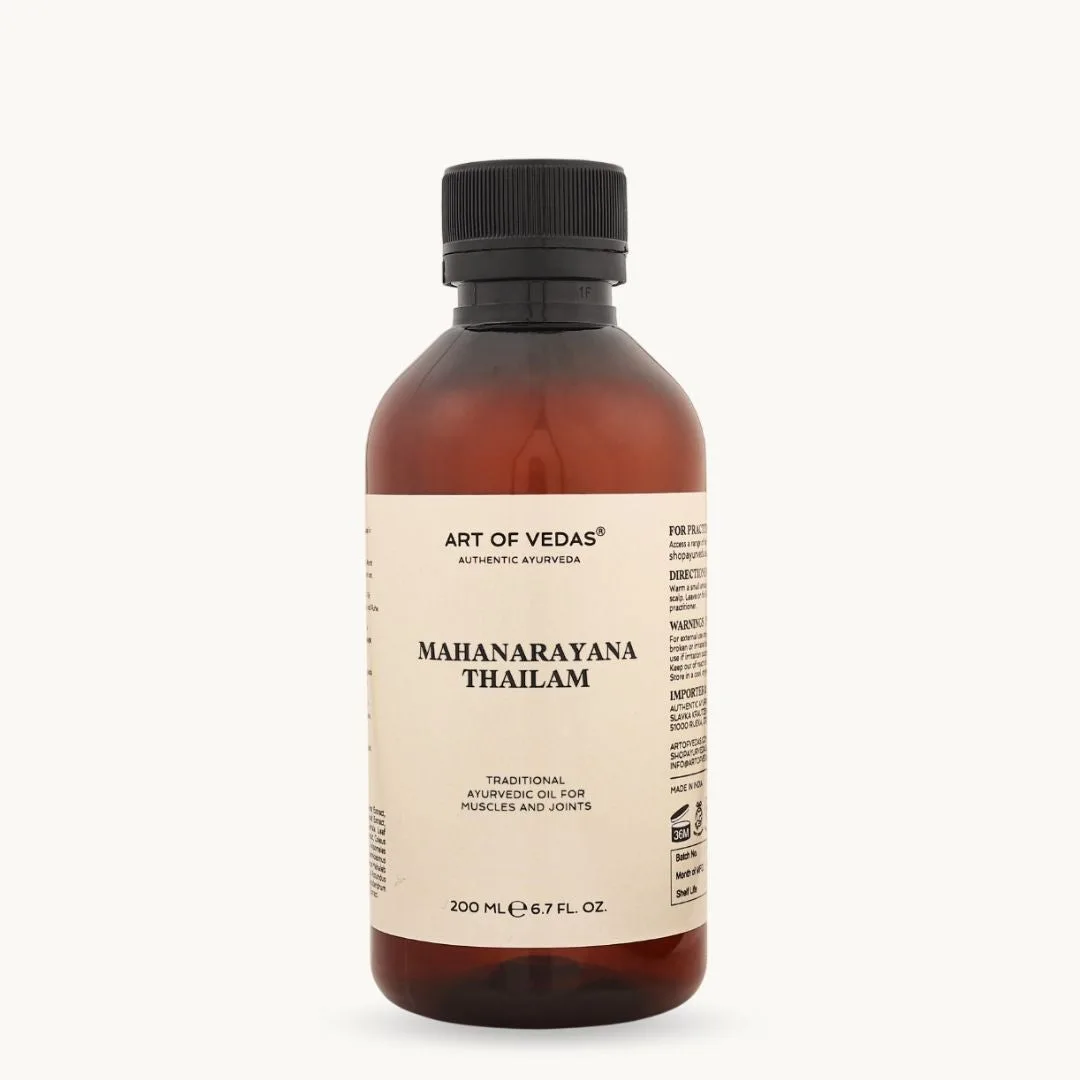
Abhyanga is the self-massage that opens the daily routine, or Dinacharya, for many practitioners. With a Thailam it is a continuous, flowing sequence, and our guide to how to use Mahanarayana Thailam for Abhyanga describes that classical liquid-oil method. A Kuzhambu version keeps the same intention, warming and settling the body before the day, but adapts the technique to a preparation that stays where it is placed instead of spreading freely.
How a Kuzhambu Changes the Abhyanga
Because a Kuzhambu is semi-solid, it is not applied in the same sweeping way as an oil. It is warmed until it softens, taken up in small amounts and worked into one area at a time. This gives each region more focused attention and longer contact with the preparation, since a Kuzhambu absorbs slowly and clings to the skin. The trade-off is that covering the whole body takes more time and more care. For this reason a Kuzhambu Abhyanga is less about speed and more about thoroughness, moving methodically from one part of the body to the next. Practical warming and quantity guidance is set out in our note on how to warm and apply a Kuzhambu.
A Region-by-Region Sequence
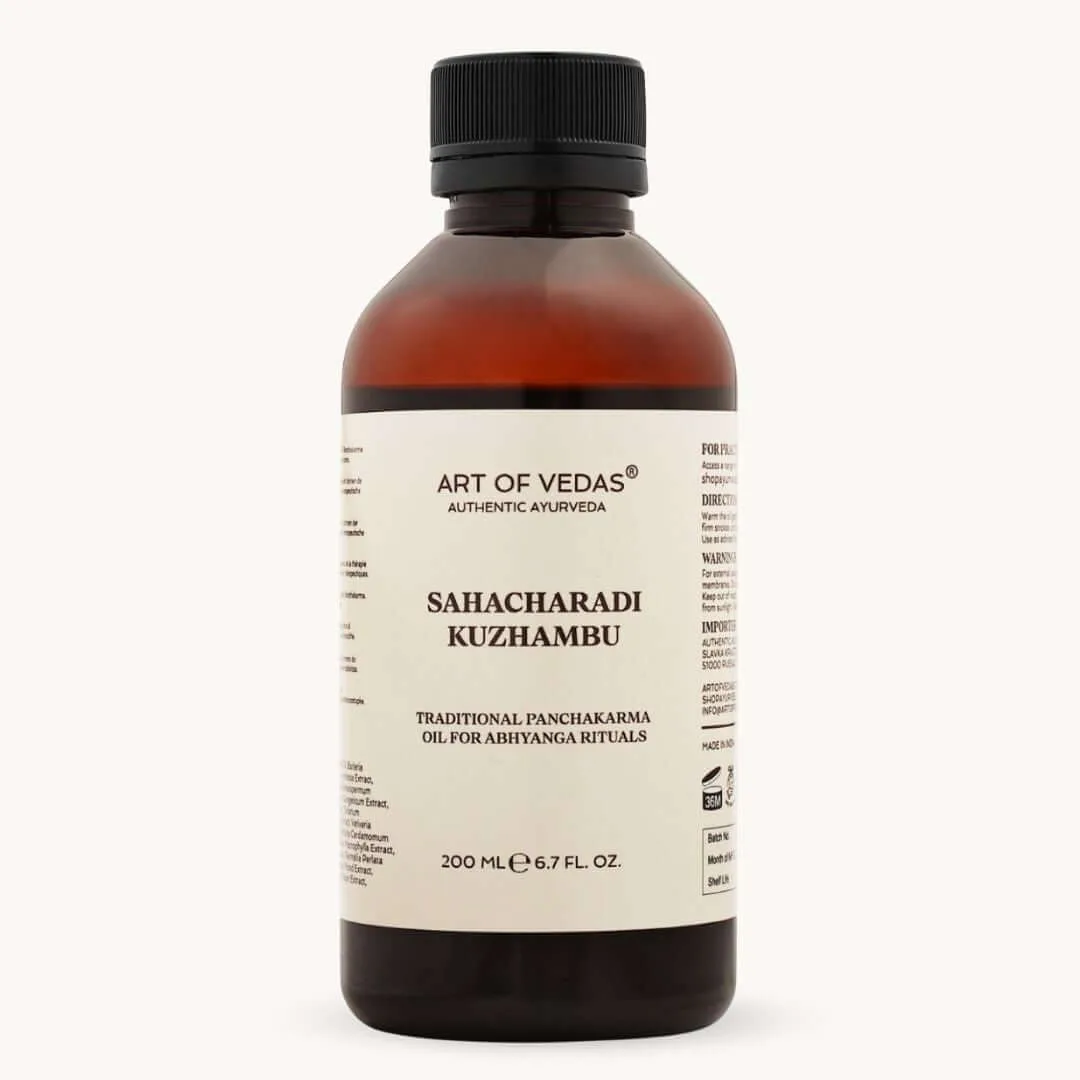
A Kuzhambu Abhyanga typically follows the same direction as the classical oil massage, but treats each region as its own small ritual. A warming formula such as Dhanwantharam Kuzhambu or Sahacharadi Kuzhambu is worked into the lower back, hips, knees and shoulders in turn, with long strokes along the limbs and circular strokes around the joints. Only a little is needed for each area. Rather than aiming to coat the whole body quickly, the practitioner gives unhurried attention to the regions that most want warmth and grounding, then allows the preparation time to settle.
Adding a Kansa Wand
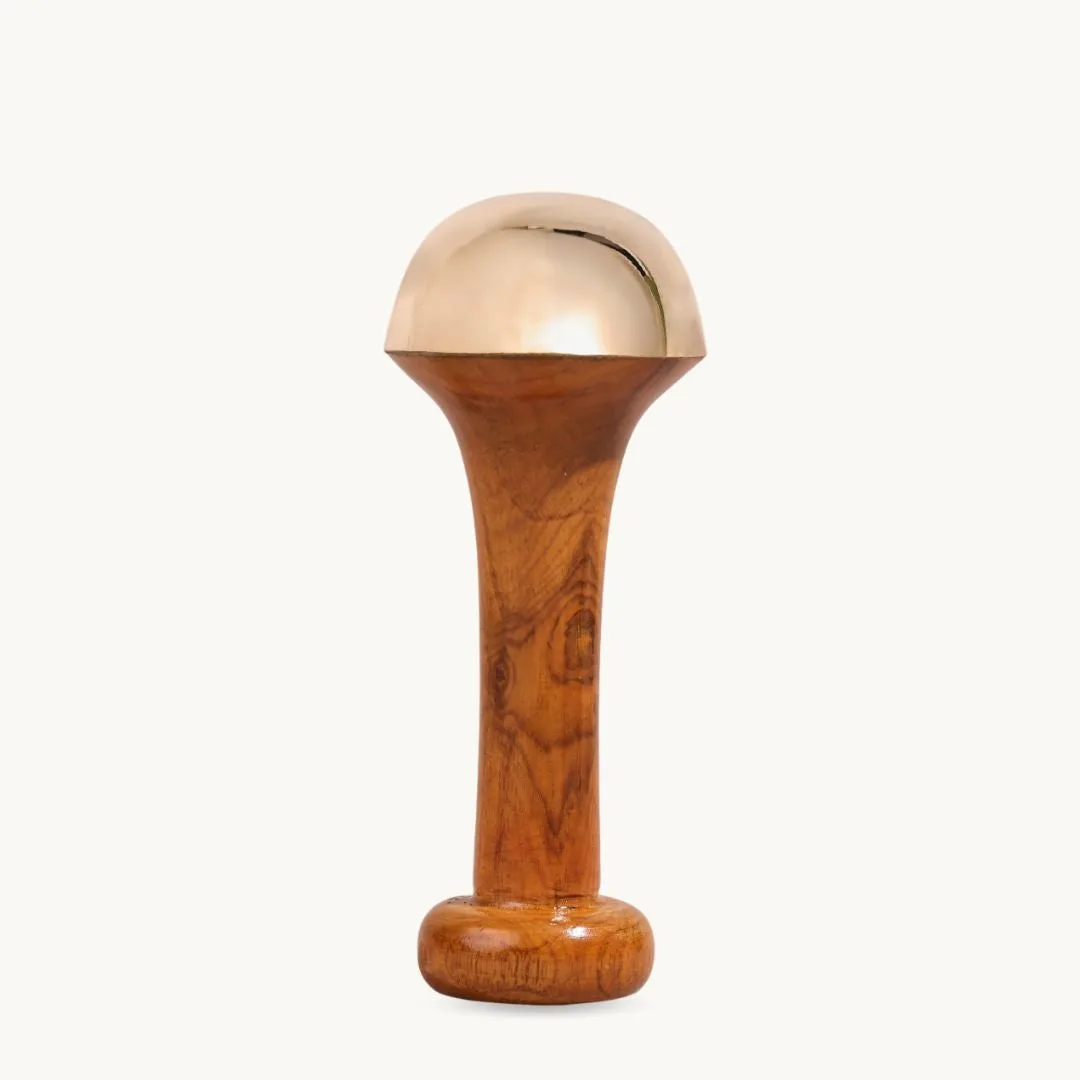
Many people pair a Kuzhambu Abhyanga with a Kansa tool. Once the preparation has been worked into a region, a Kansa Abhyanga wand can be moved gently over the same area to continue the massage without adding more preparation. The bronze surface glides over the softened Kuzhambu and lets the strokes carry on smoothly. Our Kansa Abhyanga wand body massage guide explains the tool in detail. The pairing of a warming Kuzhambu and a Kansa wand is a natural extension of the region-by-region approach.
After the Massage
Because a Kuzhambu is dense and slow to absorb, it is usual to rest for a short while after the massage so the preparation can settle, then to bathe in warm water. A gentle wash removes any surplus while leaving the skin comfortable and cared for. This closing step is the same in principle as after an oil Abhyanga, though a Kuzhambu may call for a little more warmth to rinse away cleanly.
The advantages of the Kuzhambu approach include:
- Focused, unhurried attention to the regions that most want warmth.
- Longer contact between the preparation and the skin, thanks to slow absorption.
- Less spreading and dripping than a liquid oil, since the preparation stays where it is placed.
- A natural fit with a Kansa wand for continued massage over each area.
- A grounding, warming ritual well suited to cooler seasons and evenings.
In terms of ingredients, the Kuzhambu chosen shapes the character of the massage. A Dhanwantharam Kuzhambu is built on the classical Vata-settling formula, prepared from a herbal decoction cooked into sesame, coconut and castor and reduced to a semi-solid. A Sahacharadi Kuzhambu carries the Sahacharadi herbs in the same three-fat base and is a traditional choice for the lower body. Both are warming preparations reduced to a dense consistency, which is exactly what allows the region-by-region technique to work.
Frequently Asked Questions
How is a Kuzhambu Abhyanga different from an oil Abhyanga?
An oil Abhyanga uses a liquid Thailam that spreads across the body in flowing strokes. A Kuzhambu Abhyanga uses a semi-solid preparation applied to one region at a time, giving each area longer, more focused contact.
Can a Kuzhambu really be used over the whole body?
It can, but the method is different. Because a Kuzhambu stays where it is placed, the body is treated region by region rather than coated all at once. This takes more time than a flowing oil massage.
Do I warm the Kuzhambu first?
Yes. A Kuzhambu is warmed gently until it softens so that it can be worked into the skin. Warming also makes the semi-solid preparation more comfortable to apply.
How much should I use?
Only a small amount per region. A Kuzhambu is concentrated and clings to the skin, so a little is worked into each area rather than applied generously as with a liquid oil.
Should I bathe afterwards?
It is customary to rest briefly and then bathe in warm water. This removes any surplus preparation while leaving the skin comfortable.
For external use only. Not a substitute for professional medical advice.